Skip to content

Premium vehicle detailing, paint correction and ceramic coating

Cut · Refine · Finish · Verify

Gloss is not something you add. It is something you uncover.

A swirled panel is not dirty and it is not dull — it is uneven. Thousands of microscopic valleys in the clear coat scatter light in every direction instead of returning it as one image. Paint correction levels that surface with abrasives on a machine polisher until the reflection is whole again. It is subtractive work on a finite layer, which is why we measure the layer first.

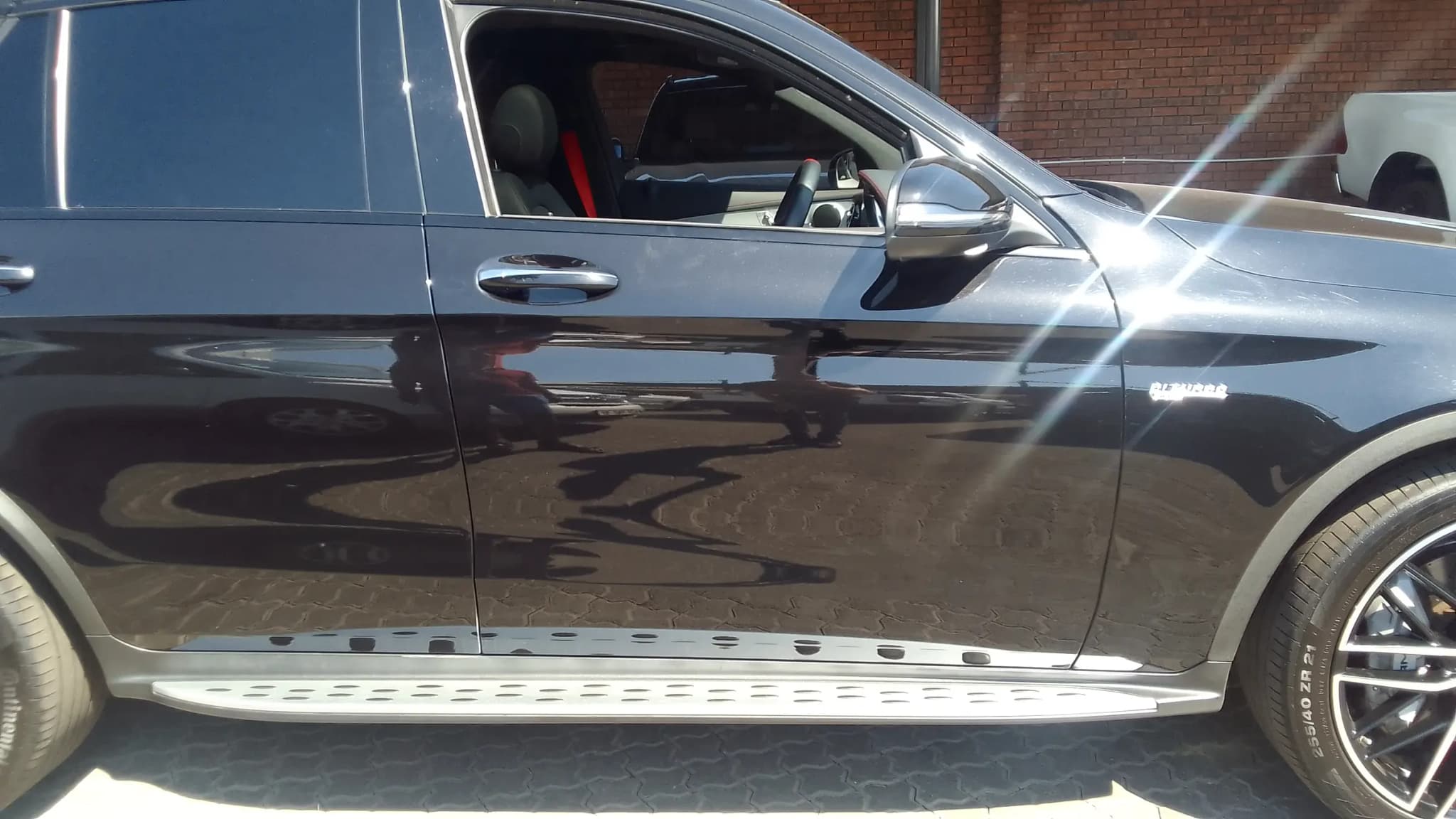
Raking sunlight across the uncorrected flank of a black Mercedes-AMG GLC 43, the marring in the clear coat scattering the light
3stage
Maximum correction

Cut, refine and finish, each with its own pad and abrasive

94GU
Typical finished gloss

Measured at 60° on corrected black paint

120µm
Typical total film build

Depth gauged panel by panel before a machine is switched on

What you are actually looking at

Swirl marks are missing clear coat, not dirt on top of it

Park a dark car in direct sun and you will see it: a spiderweb of fine circular scratches that seems to rotate around the light source. Each one is a scratch cut into the clear coat by grit dragged across the paint — almost always by an automatic wash, a dirty mitt or a dry chamois. Light entering a scratch bounces off its walls and leaves in the wrong direction. Enough of them and the panel stops returning an image and starts returning a haze. Nothing you spray on removes them, because there is nothing there to remove.

  • Swirls and wash marring — fine, circular, worst on horizontal panels
  • Holograms — a shimmering buffer trail, the signature of a rushed rotary
  • Etching — bird lime, sap and water spots that have eaten into the clear
  • Oxidation — a chalked, milky surface on paint left unprotected in the sun
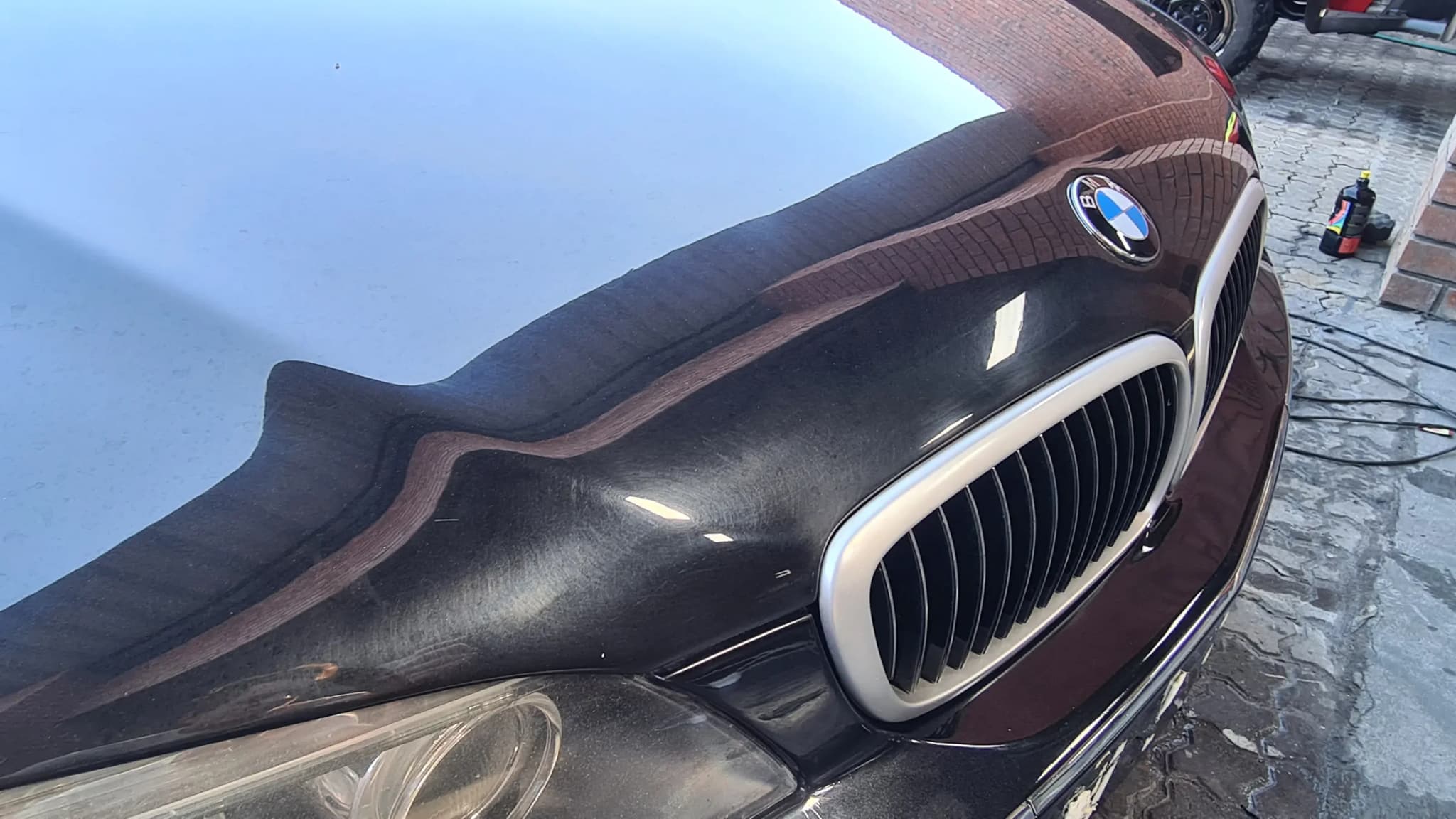
Raking sunlight across an uncoated black bonnet showing the haze and swirl marks left by years of automated washing
Uncorrected, after years of automatic washingPD
Before anything is switched on

We measure the layer before we start removing it

Factory clear coat is typically 40 to 60 microns thick — about half the width of a human hair — and it is all you have. Every correction stage takes some of it away, and it never grows back. So the first hour is a gauge and a notebook: readings across every panel, mapped and recorded, with resprayed sections, thin edges and previous polishing flagged. On a car that has been machined badly before, that map is the difference between a safe correction and a burn-through onto primer.

  • Electronic depth gauge readings taken across every panel and recorded
  • Resprays and filler found by the readings before they are found by a pad
  • Thin edges, swage lines and badge surrounds marked and worked by hand
  • A panel with nothing to spare is protected as it is — and we tell you so
We measure the layer before we start removing it
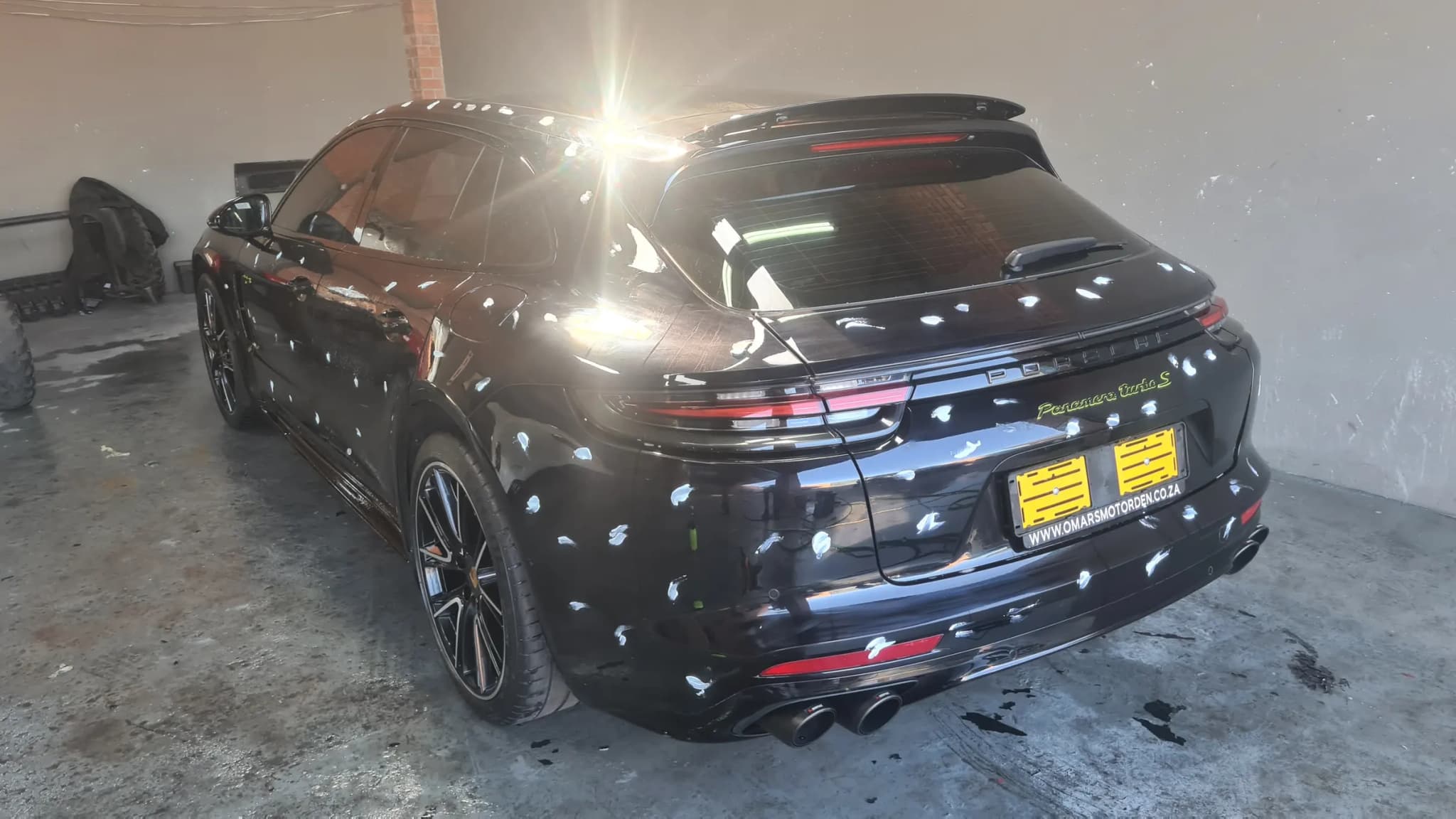
The test section

The least aggressive combination that actually works

Pad and compound are not chosen from a price list; they are found. We tape off a small section on a representative panel and work up from the gentlest combination until defects stop coming out, then settle on the first one that fully clears them. Harder abrasives cut faster and cost you more clear coat, so the goal is always the softest pad and the finest compound that will still do the job. That test section is then shown to you, wiped down beside untouched paint, before the rest of the car is committed.

  • A taped 50/50 on a representative panel, worked before anything else
  • Pad and abrasive stepped up only until the defects clear, never further
  • Result inspected wet-wiped, with the polishing oils removed
  • You see the achievable finish beside the current one and approve it
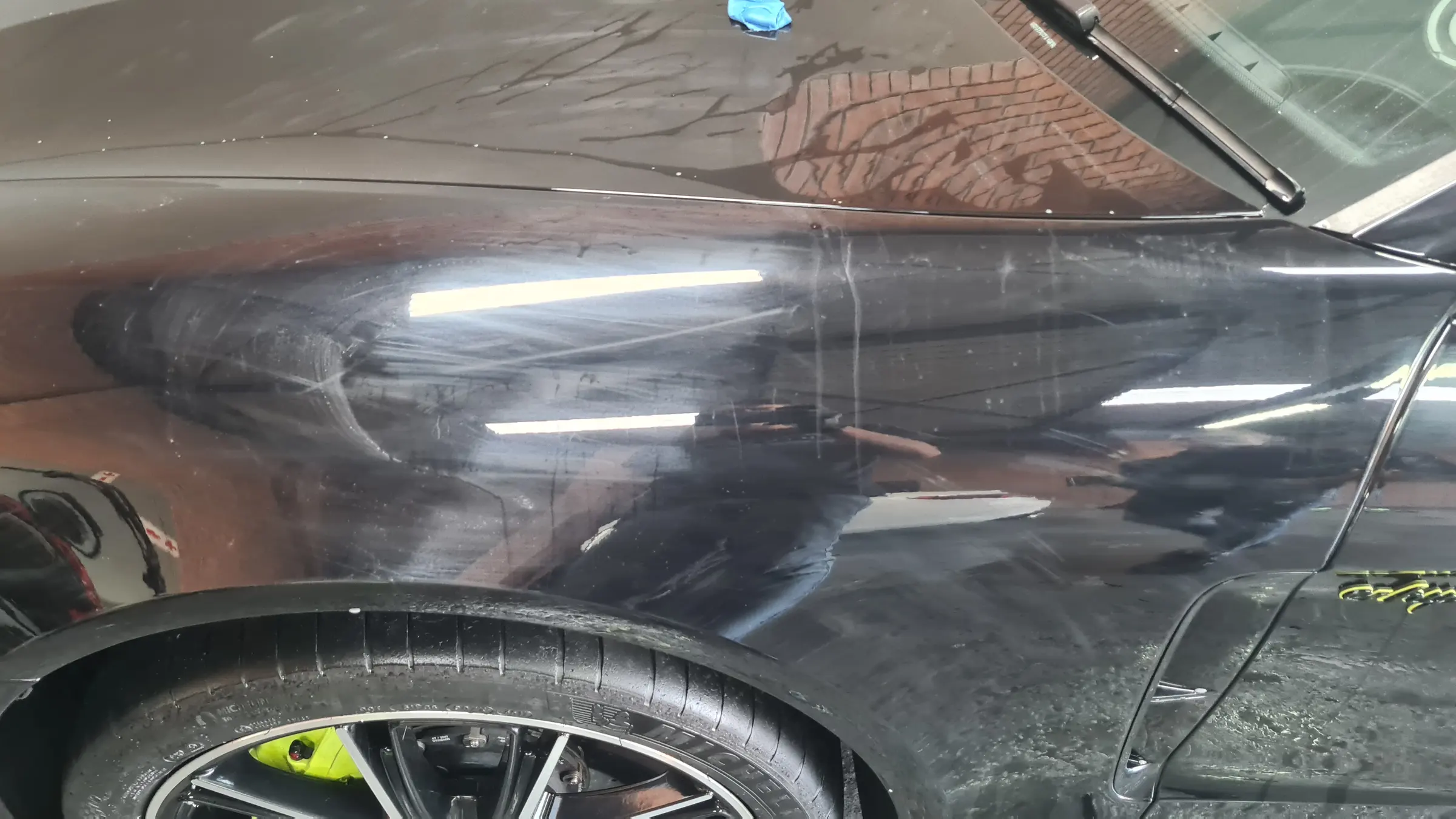
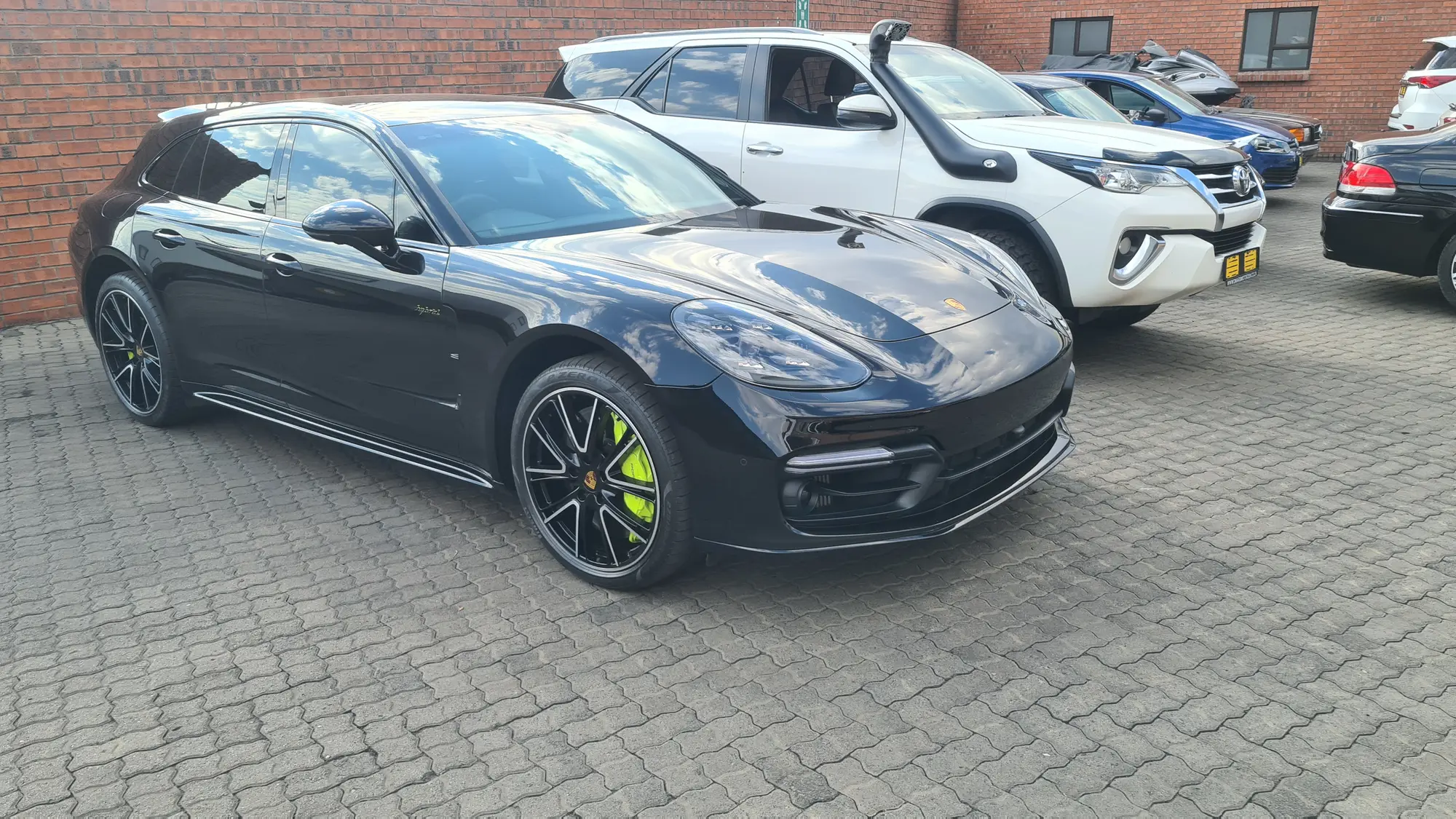
A black Porsche flank part-way through correction, compound haze still showing in the reflection
Working the agreed combination across the panelPD
How far it goes

One stage, two, or three — and what each one buys

Correction is sold in stages because clear coat is finite and budgets are real. A single stage brightens a tired car and removes the lightest marring in a day. Two stages is where most cars land: a cutting pass to take the defects out, then a refining pass to remove the haze the cutting pass itself leaves behind. Three stages is for dark paint that has to be flawless under a showroom light, finishing with a soft pad and an ultra-fine polish that adds nothing but clarity. We will tell you which one your paint can support, and we will talk you out of the one it cannot.

  • Single stage — 60 to 80% defect removal, one day, ideal before resale
  • Two stage — 85 to 95%, the standard for a car you intend to keep
  • Three stage — as close to flawless as the paint allows, for dark and show finishes
  • Wet sanding is available on isolated defects, quoted separately and never casually
One stage, two, or three — and what each one buys
Inspection

Three light sources, because one will lie to you

Paint that looks perfect under workshop fluorescents can be a mess in sunlight. We check under raking halogen for depth of defect, under cross-polarised light to strip the surface reflection and show what is really left in the clear, and under a daylight-balanced source that matches what you will see in a car park. Every panel is wiped with a solvent between checks so the polishing oils are gone — because oils fill defects temporarily, and a finish inspected through them is a finish you will lose at the first wash.

  • Raking halogen for defect depth and direction
  • Cross-polarised inspection to see past the surface reflection
  • Daylight-balanced light for the finish you will actually live with
  • Solvent wipe between stages so nothing is judged through filler oils
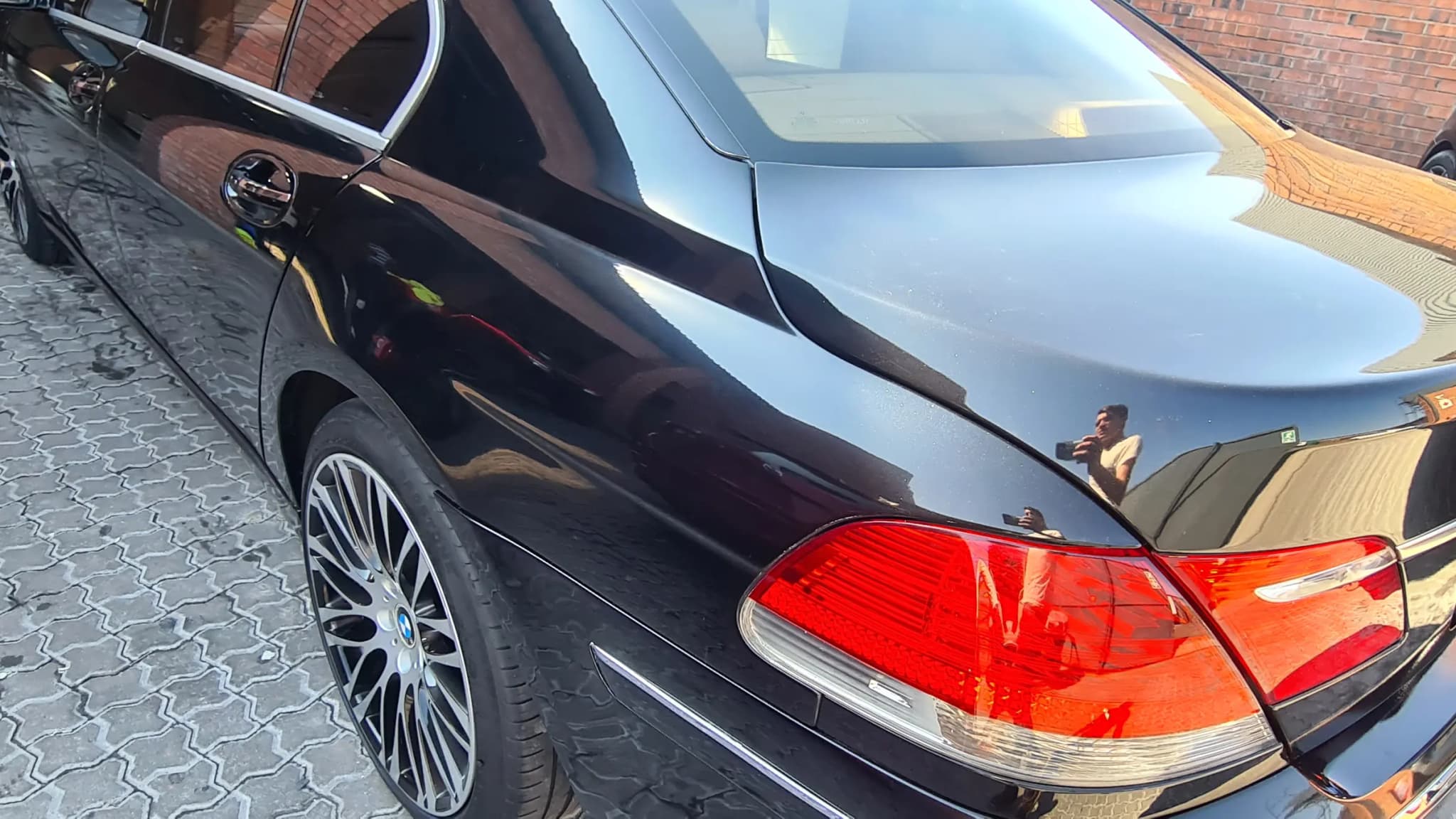
The corrected rear quarter and tail lamp of a black BMW 7 Series holding a clean reflection through the curve
Reflection held through the curvePD
What correction will not do

An honest list of the things a polisher cannot fix

A scratch you can catch with a fingernail is through the clear coat, and levelling the surrounding paint down to meet it would take more than the panel has. Stone chips are missing paint, not displaced paint. Dents are a panel shop's work. Faded plastic trim needs restoring, not polishing. Clear coat that has already begun to peel or flake has failed, and abrasives accelerate it. We would rather show you the limit on the day and quote for what is genuinely achievable than hand back a car that is 80% of what you were promised.

  • Deep scratches through the clear coat — improved in appearance, not removed
  • Stone chips — touched in on request, but they are missing paint
  • Dents, creases and previous poor bodywork — referred, not disguised
  • Failed or peeling lacquer — correction is refused; it makes it worse
An honest list of the things a polisher cannot fix
Locking it in

Correction without protection is a countdown

A freshly corrected panel is the most vulnerable it will ever be: bare clear coat, stripped of every oil and sealant, with nothing between it and the next wash. That is precisely why correction and coating belong in the same booking. The coating bonds to the surface we have just created and preserves it — and because a coated surface releases dirt rather than gripping it, the washing that put the swirls there in the first place becomes far less damaging. Correct, then protect, then wash properly. Skip the middle step and you will be back inside two years.

  • Panel wiped to bare clear coat so nothing is sealed in underneath
  • Ceramic coating, sealant or wax applied to the surface just created
  • Coated paint releases contamination, so future washes contact it less
  • Aftercare media supplied — the wash is what decides how long this lasts
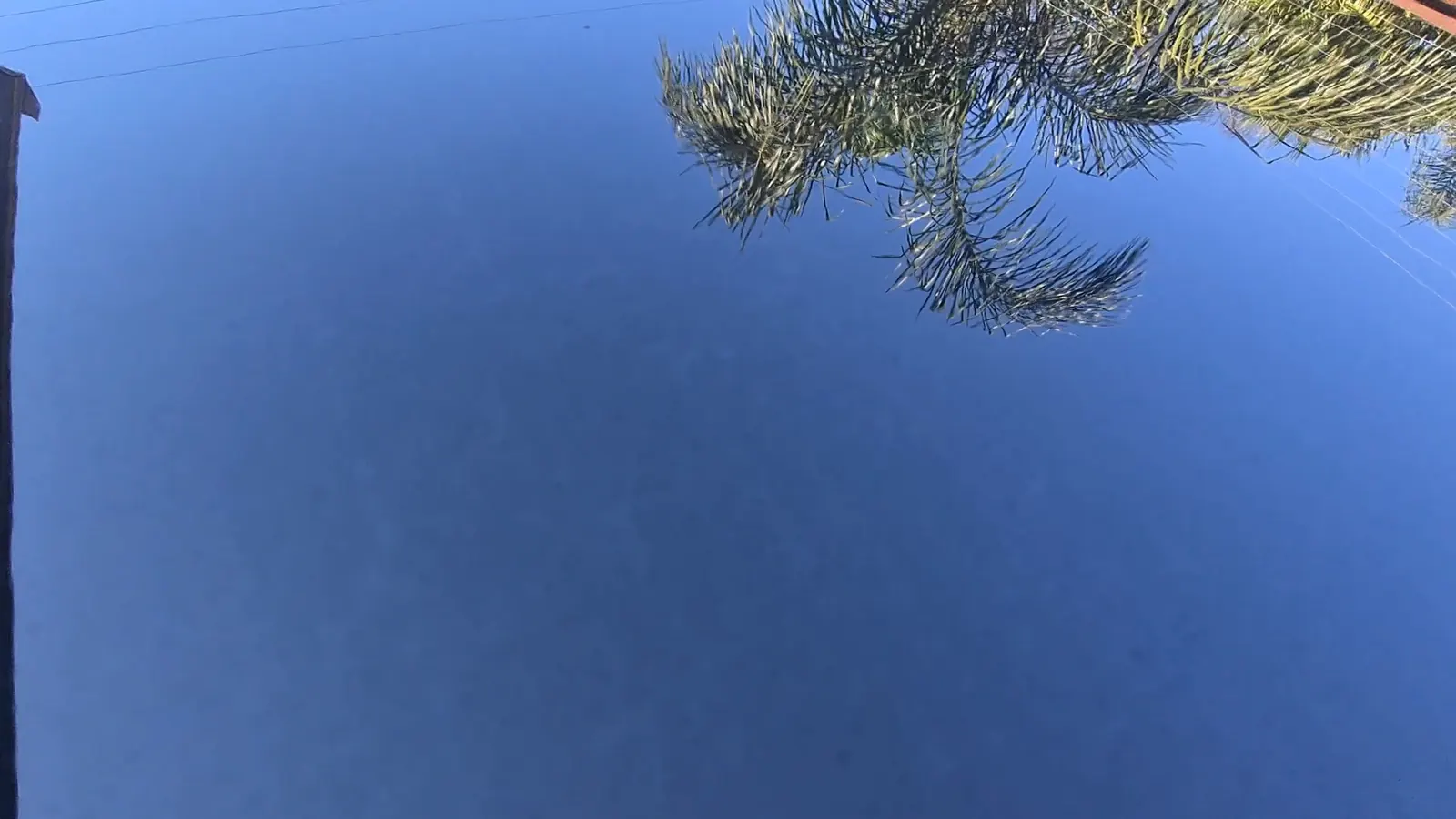
A freshly coated dark panel returning a tree and open sky as one undistorted image
Corrected, then coatedPD
Benefits

What you get out of it.

Permanent

Defects removed, not filled

Abrasives level the clear coat. Glazes and filler waxes hide the same damage for about three washes and then hand it back.

Measured

Depth-mapped and safe

Gauge readings before and during the work mean we never take more clear coat than the panel can spare.

+20 GU typical

Colour that reads as depth

A level surface returns one image instead of scattering. Dark paint stops looking grey and starts looking wet.

Bonded to bare

The right base for a coating

A coating preserves whatever is under it for years. Correction is what makes that a good thing rather than a bad one.

Value held

Real money at resale

Corrected paint moves a car out of the trade-in conversation and into the private-sale one.

Every job

Numbers, not adjectives

Gloss readings at 60° before and after go on your job card, so the improvement is a figure you can check.

Packages

How it is packaged.

Every package starts with the same inspection. What differs is how far the correction goes and how long the protection is warranted for.

Enhancement Polish

One stage. For a car in fair condition that needs its colour and clarity back.

Quoted by vehicle size and paint condition

1 day

  • Full decontamination — iron, tar and clay
  • Paint depth readings recorded across every panel
  • Single-stage machine polish, 60–80% defect removal
  • Six-month sealant on paint and glass
  • Before and after gloss readings
Most requested

Two-Stage Correction

Cut, then refine. The standard for a car you intend to keep.

Quoted after a paint inspection

2–3 days

  • Depth mapping and a taped test section approved by you
  • Cutting stage to remove defects, refining stage to remove its haze
  • Edges, swage lines and badge surrounds finished by hand
  • Three-light inspection with a solvent wipe between stages
  • Choice of sealant or ceramic coating over the result
  • Before and after gloss readings on your job card

Show Correction

Three stages on dark or show paint, finished with an ultra-fine polish.

Quoted after a paint inspection

3–5 days

  • Everything in the two-stage correction
  • A third finishing pass on a soft pad with an ultra-fine polish
  • Isolated wet sanding where a defect justifies it and the paint allows
  • Trim, glass and wheel faces corrected and coated to match
  • Multi-layer ceramic coating with a written warranty
On the day

Exactly how this job runs.

Tap any stage to see what happens inside it.

    • Readings recorded panel by panel
    • Resprays, filler and thin edges flagged
    • Achievable finish agreed in writing before work starts
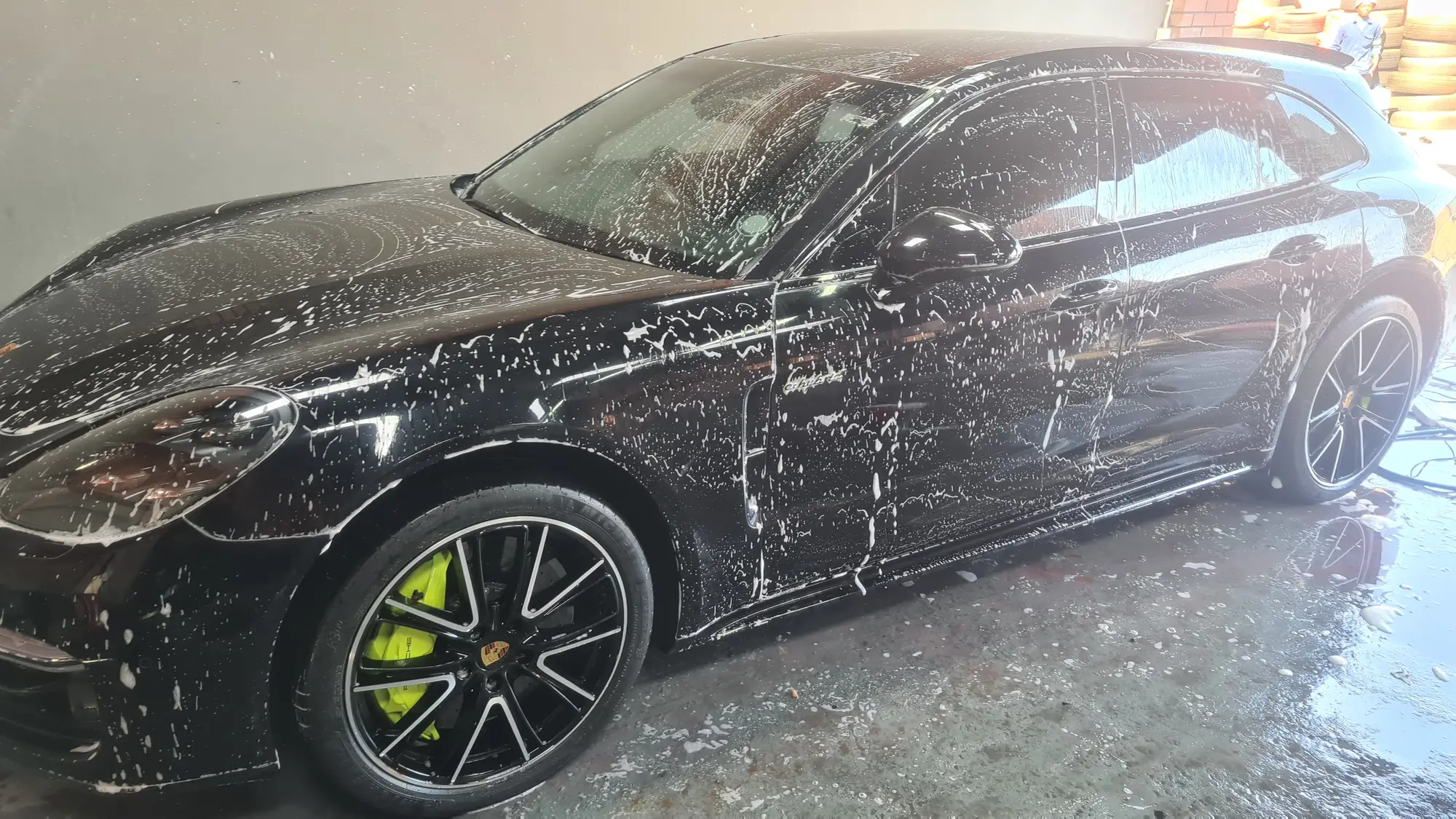
A black Porsche standing in the wash bay under inspection lighting before correction begins
Stage 01 — depth mappedPD
Expected lifespan

How long it holds

The correction itself
Permanent

The clear coat is level. It stays level until something puts new scratches in it

Corrected and left unprotected
12–24 months

Ordinary washing re-marrs bare clear coat surprisingly quickly

Corrected and sealed
2–3 years

With a sealant re-applied twice a year and a safe wash method

Corrected and ceramic coated
4–6 years

The coating takes the contact damage instead of the clear coat

Keeping a corrected finish

Correction is a one-off. Keeping it is a habit. Almost every swirl we remove was put there by a wash, which means the way your car is washed from here decides whether this lasts two years or six. We hand over the method and the media, and we would genuinely rather you used them than booked us again sooner.

  • 01Two buckets, grit guards and a fresh mitt — never a sponge, never a brush
  • 02Never an automatic wash, and never a dry wipe on a dusty panel
  • 03Pre-soak and foam before anything touches the paint
  • 04Dry with a plush drying towel and a drying aid, or force-dry with filtered air
  • 05A maintenance detail every six to twelve weeks keeps contact washing to a minimum
  • 06An annual inspection on coated cars keeps the warranty live
Questions

Correction, answered.

All questions
  • You do not, and neither do we until we have looked at it. We gauge the clear coat across every panel, then work a taped test section up from the gentlest pad and compound until the defects clear. That tells us what the paint needs and what it can safely support — sometimes those are different numbers, and when they are we say so. You see the test section beside untouched paint and approve the finish before the rest of the car is committed.

Next step

Ready to talk about correction?

Send us the details and you will have a written, itemised quote within one working day.