Skip to content

Premium vehicle detailing, paint correction and ceramic coating

Exterior · Interior · Correction · Protection

Detailing is a sequence. Skip a step and it shows.

A car is a set of very different materials pretending to be one object: clear coat, glass, chrome, anodised trim, textured plastic, leather, alcantara, carpet and painted metal under the bonnet. Each wants a different chemistry and a different order of operations. We work through them in sequence, because the shortcuts are always visible six months later.

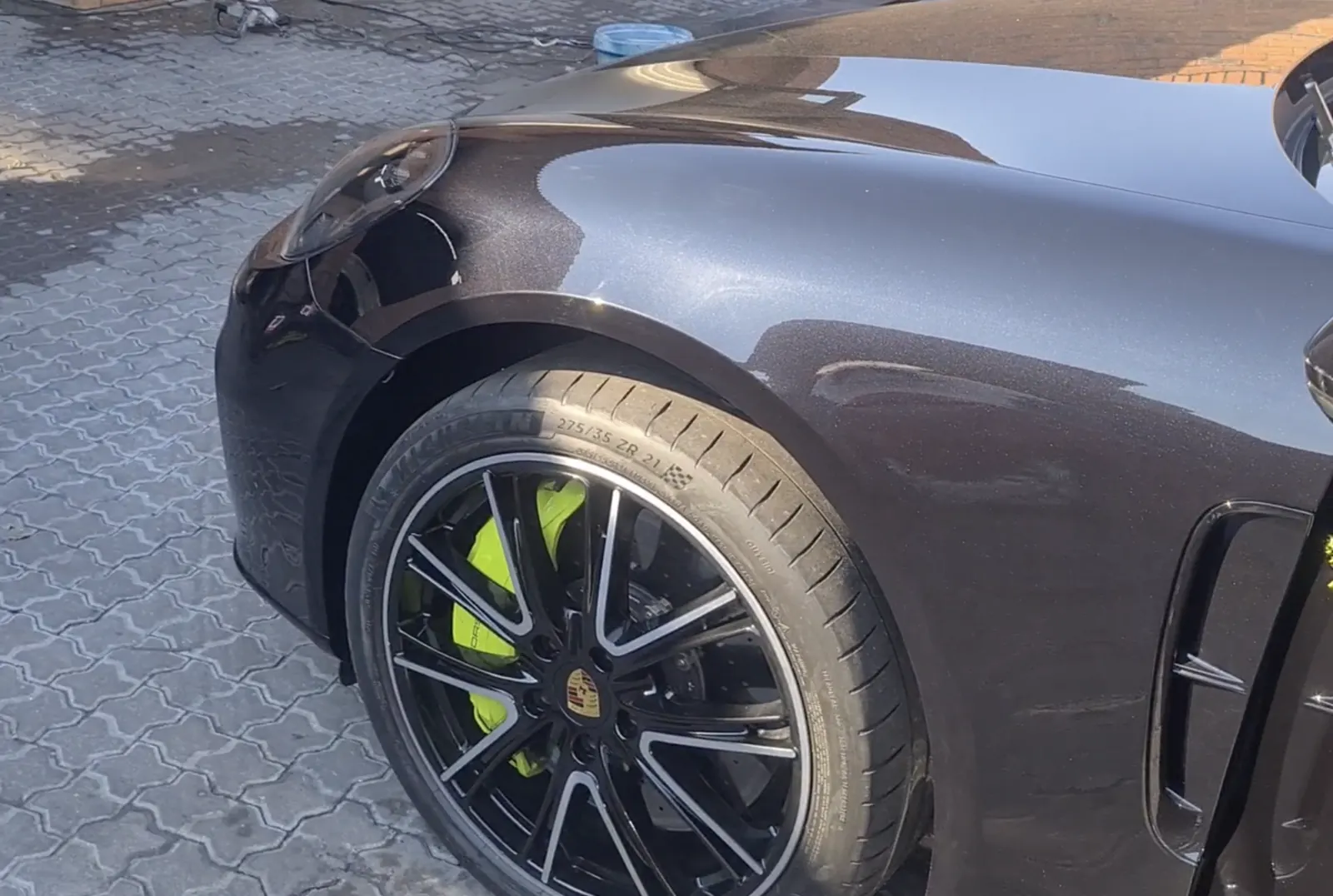
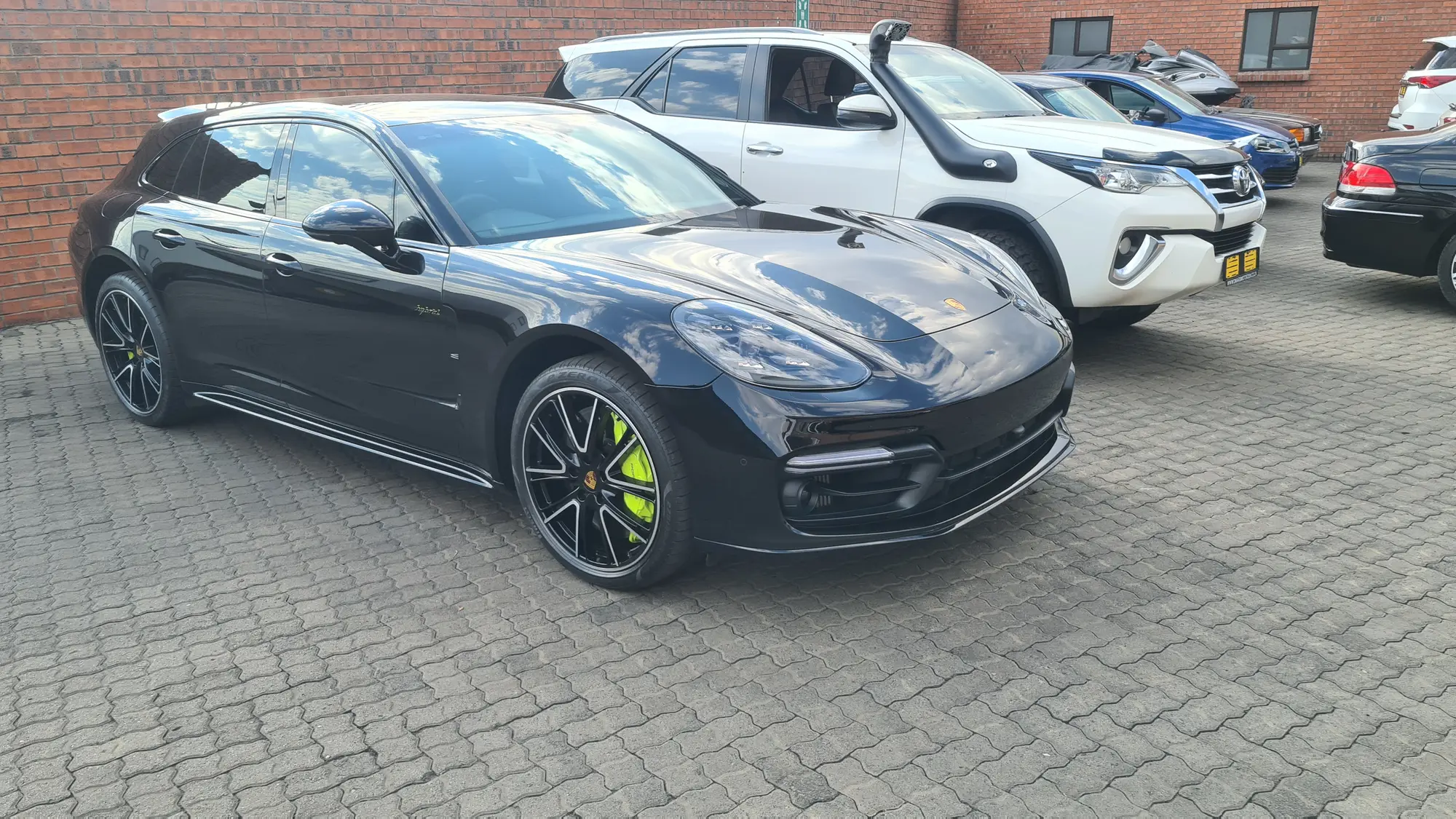
A black Porsche Panamera Sport Turismo photographed outdoors after a full detail, holding an unbroken reflection along its flank
3stage
Maximum correction

Cut, refine and finish, guided by depth readings

94GU
Typical finished gloss

Measured at 60° on corrected black paint

18hrs
Average full detail

Spread across two days for a mid-size car

Exterior detailing

Everything that happens before a polisher is switched on

Most of the risk in detailing lives in the wash. Grit dragged across paint by a dirty mitt puts in more defects than a week of driving. We pre-soak to soften road film, foam and dwell, then wash with two buckets and fresh media, working panel by panel from the top down. Wheels, arches and exhaust tips are handled separately with their own tools so brake dust never reaches the paintwork.

  • Premium snow foam pre-soak and dwell before anything touches the paint
  • Two-bucket contact wash with grit guards and fresh media per panel
  • Wheels, barrels, arches and tips cleaned with dedicated tools
  • Deionised final rinse so the car dries without mineral spotting
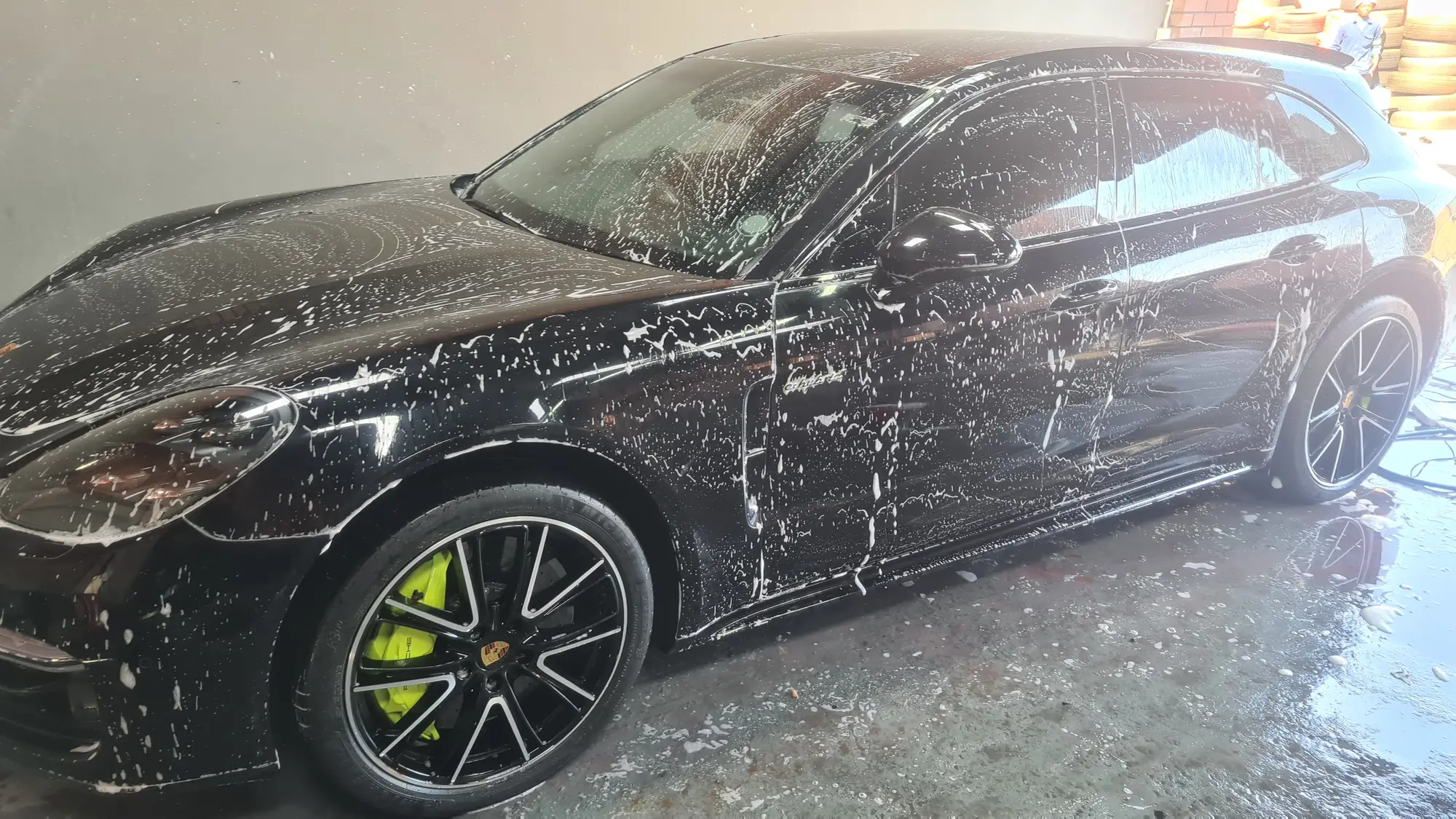
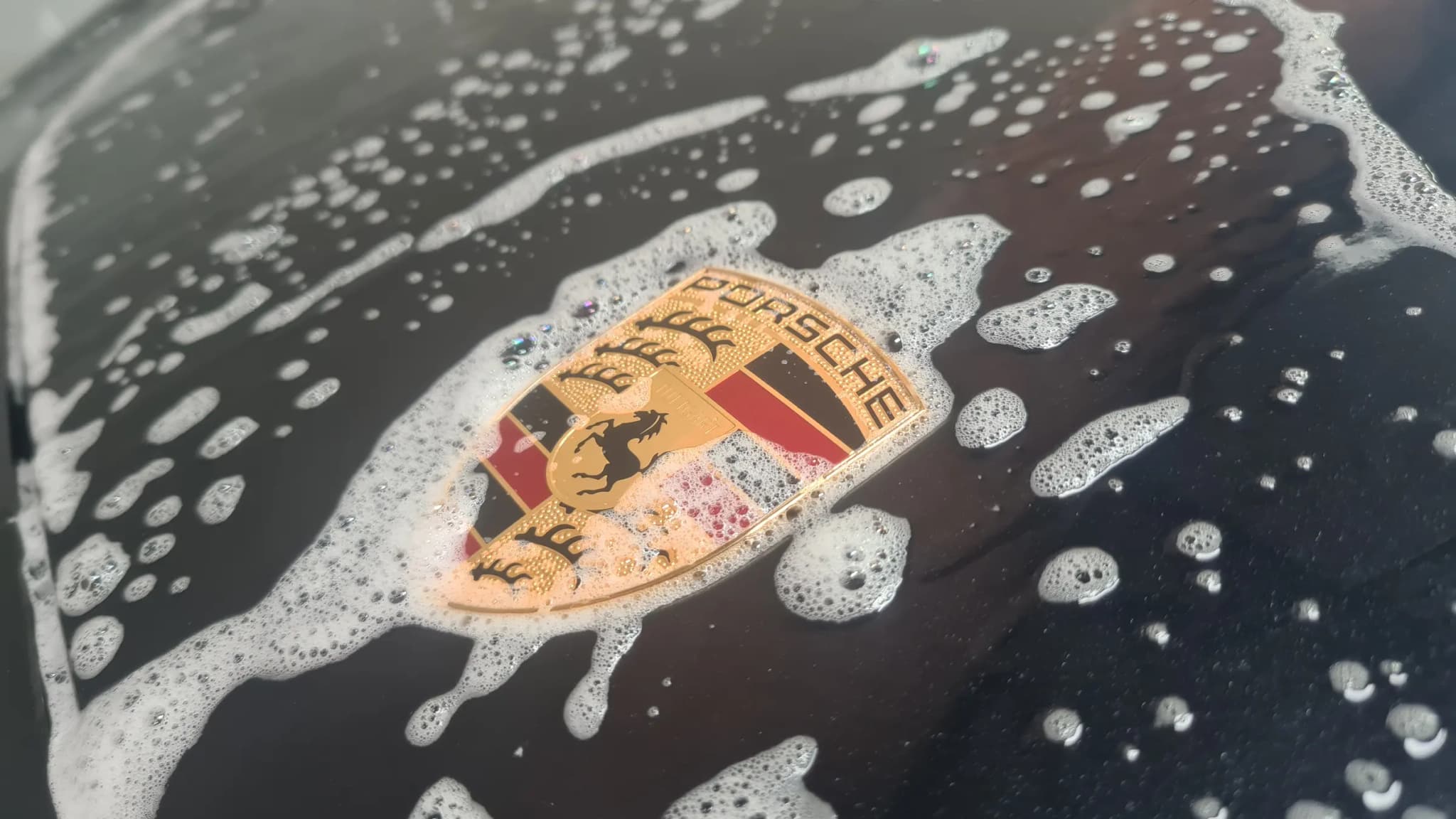
A black Porsche Panamera under a full covering of snow foam, left to dwell before anything touches the paint
Snow foam pre-soakPD
Paint decontamination

Washing removes dirt. Decontamination removes what has bonded.

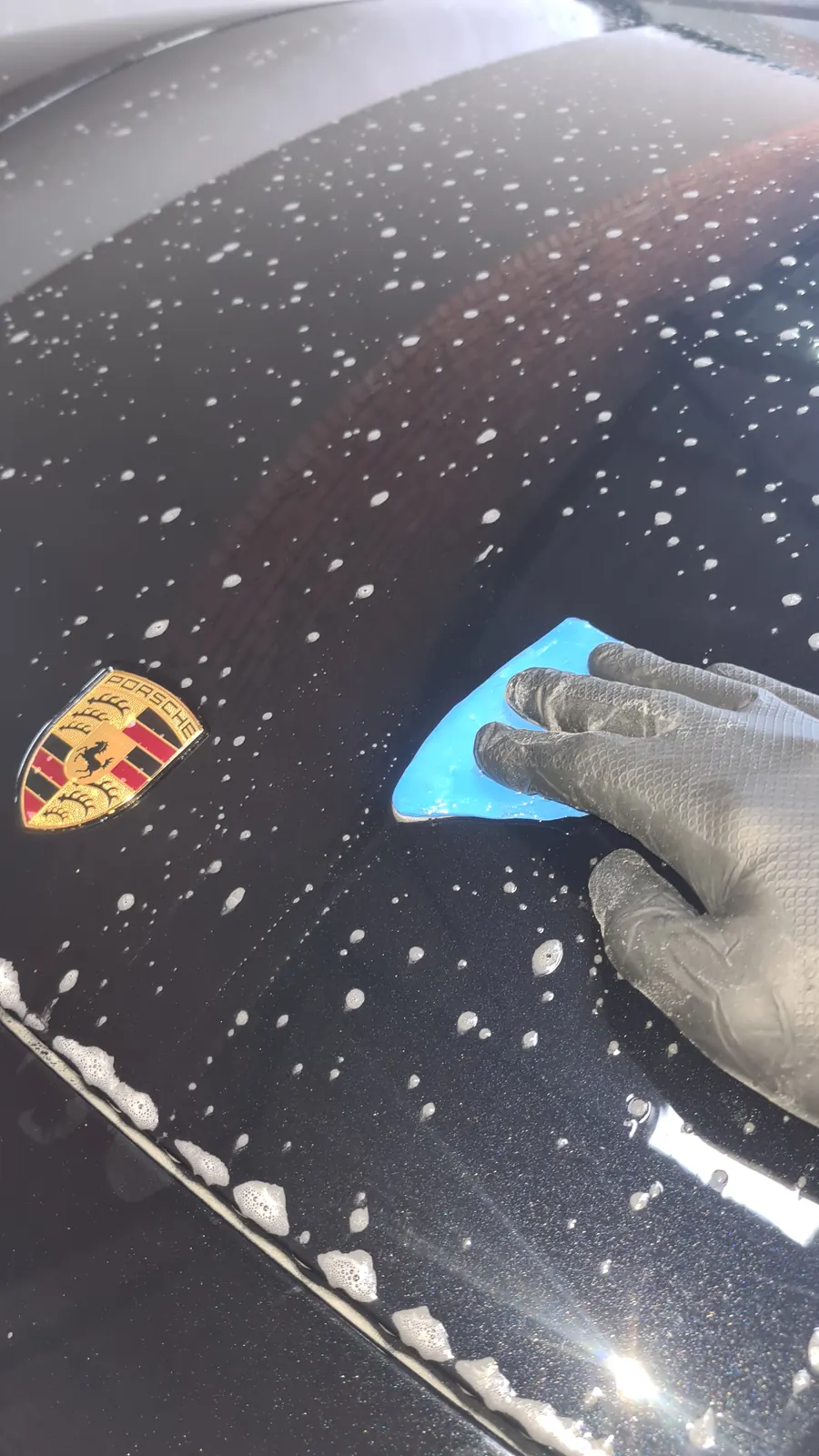
Run your hand over washed paint through a plastic bag and you will feel it — the roughness is embedded iron from brake and rail dust, tar, overspray and industrial fallout. None of that comes off with shampoo. We dissolve the ferrous particles chemically, soften tar with a solvent, then shear off whatever remains with a lubricated clay treatment until the surface is genuinely smooth.

  • Iron remover dissolves embedded ferrous particles chemically
  • Tar and adhesive residue softened and lifted with solvent
  • Clay treatment on fully lubricated paint to shear off bonded contamination
  • Surface checked by touch and under raking light before correction
A gloved hand drawing a clay bar across a lubricated, foamed black panel beside the Porsche crest
Clay treatment on lubricated paintPD
Machine polishing & paint correction

Removing defects, not hiding them

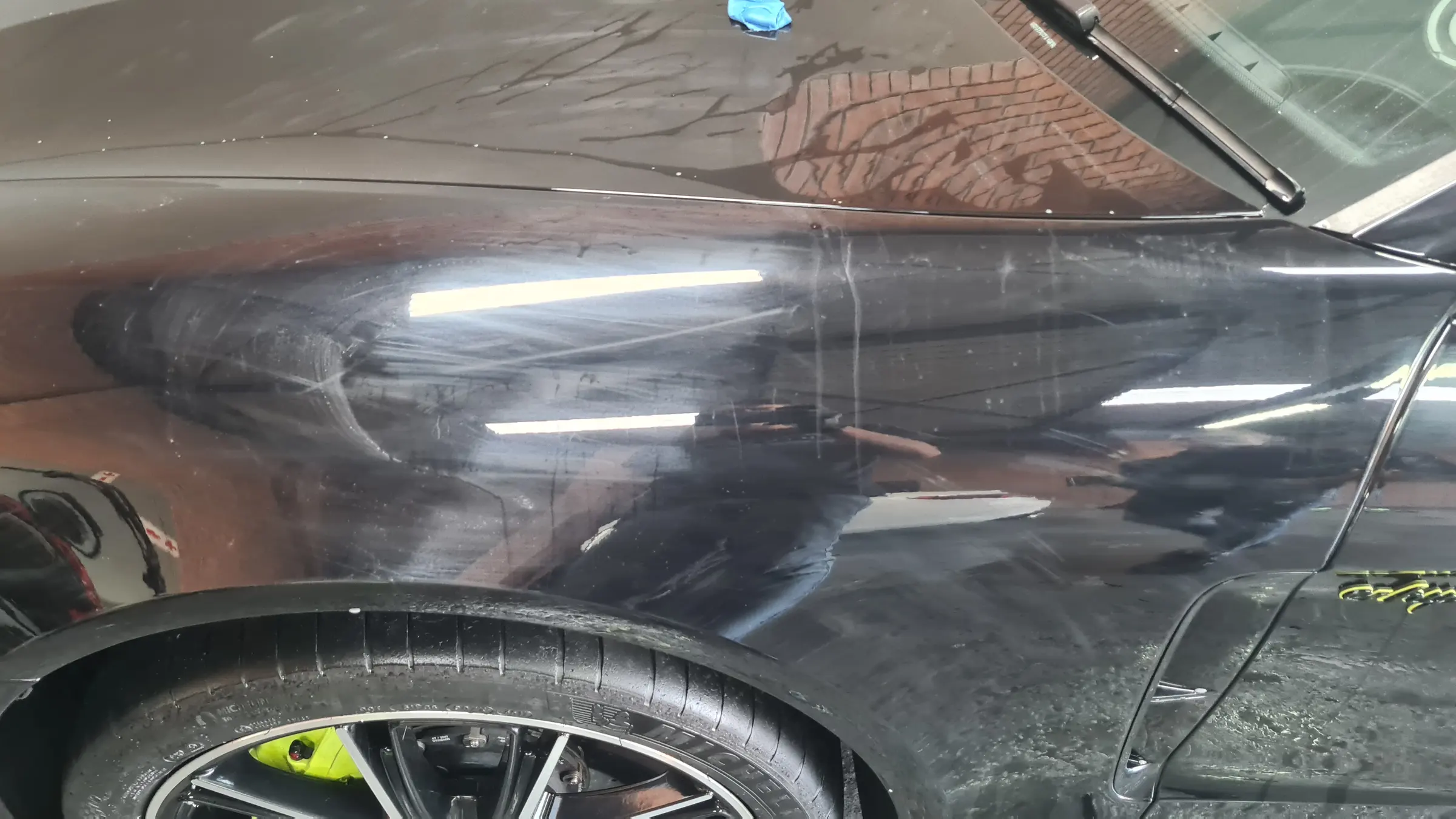
Swirl marks, holograms, etching and oxidation are all missing clear coat — light scattering out of thousands of tiny valleys instead of reflecting cleanly. Correction levels the surface around them with abrasives on a machine polisher. It is a subtractive process on a finite layer, so we measure clear coat depth before we start, work a test section to find the least aggressive combination that works, and stop where it is safe to stop.

  • Paint depth gauged panel by panel; thin areas and repairs flagged
  • Test section establishes the least aggressive pad and compound that works
  • Cut stage removes defects; refine stage removes the cut's own haze
  • Verified under raking, cross-polarised and daylight-balanced light
A black Porsche flank part-way through correction, compound haze still visible in the reflection
Cut stage, rotary and wool padPD
Interior deep cleaning

The part you actually sit in

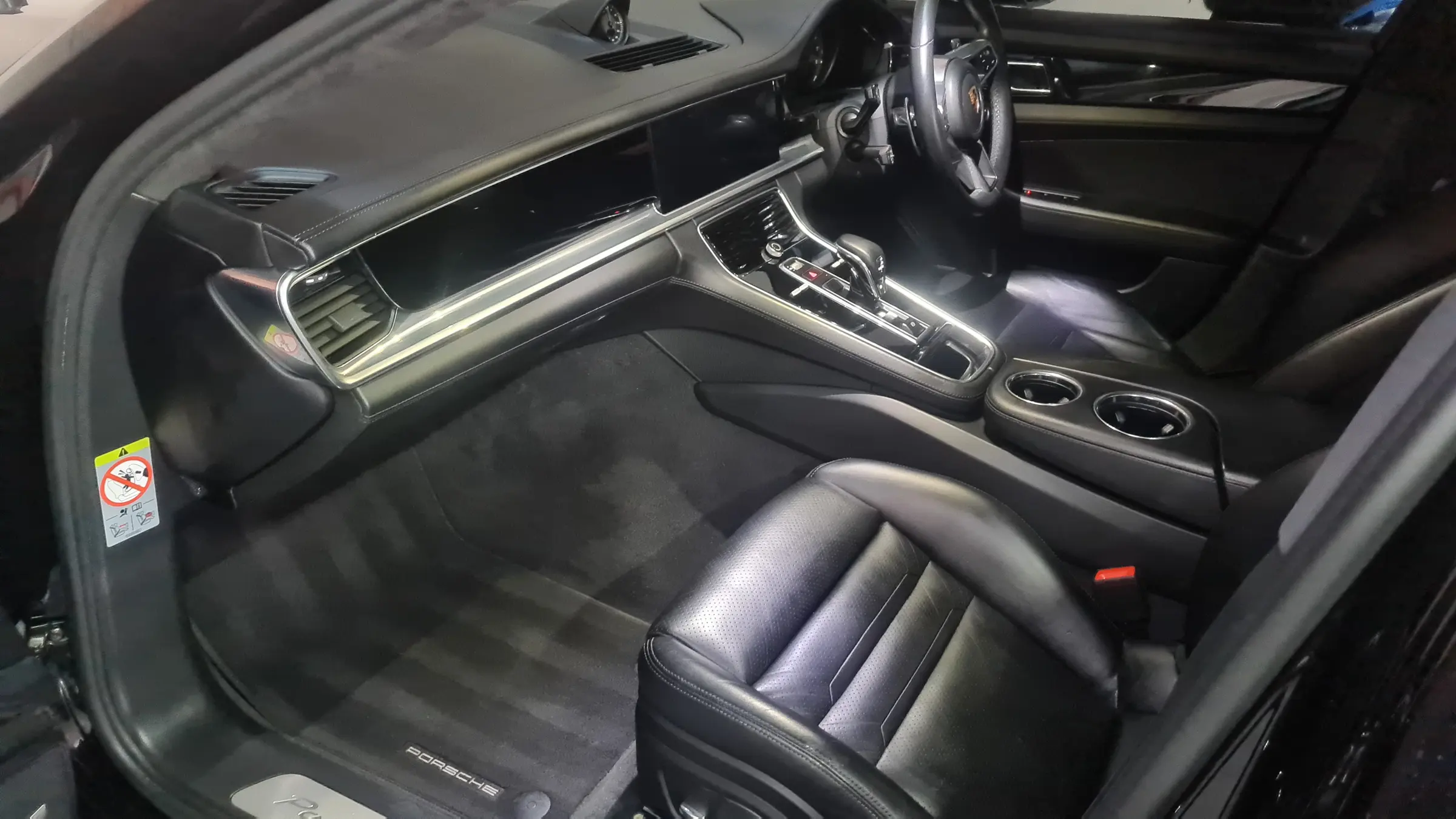
Interiors are cleaned from the top down and dry to wet. Vents, headliner and pillars first, then trim and console, then seats and finally carpets, so nothing settles onto surfaces already finished. Fabric and carpet are hot-water extracted. Leather is cleaned with a pH-appropriate product and a soft brush to lift soiling out of the grain, then conditioned — never dressed with something that leaves a shine.

  • Compressed air and soft brushes through vents, seams and switchgear
  • Hot-water extraction on fabric seats, carpets and mats
  • Upholstery extraction and leather conditioning as standard, not an extra
  • Leather cleaned in the grain, then conditioned — matte, never greasy
  • Glass finished last, inside and out, with a streak-free two-towel method
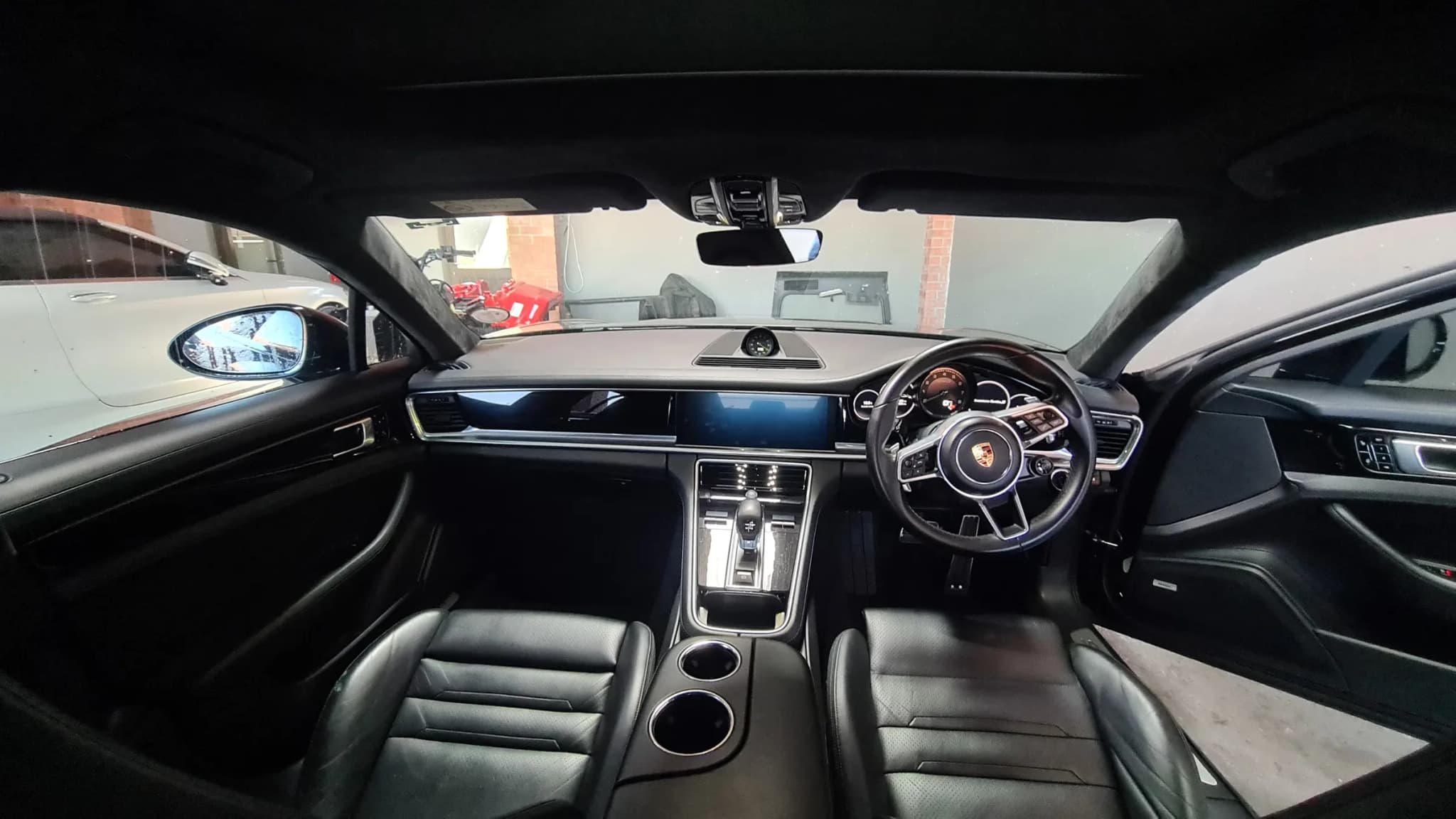
The front cabin of a Porsche Panamera after a full interior detail
Leather cleaned in the grain, then conditionedPD
Engine bay detailing

Careful, dry-biased, and worth doing

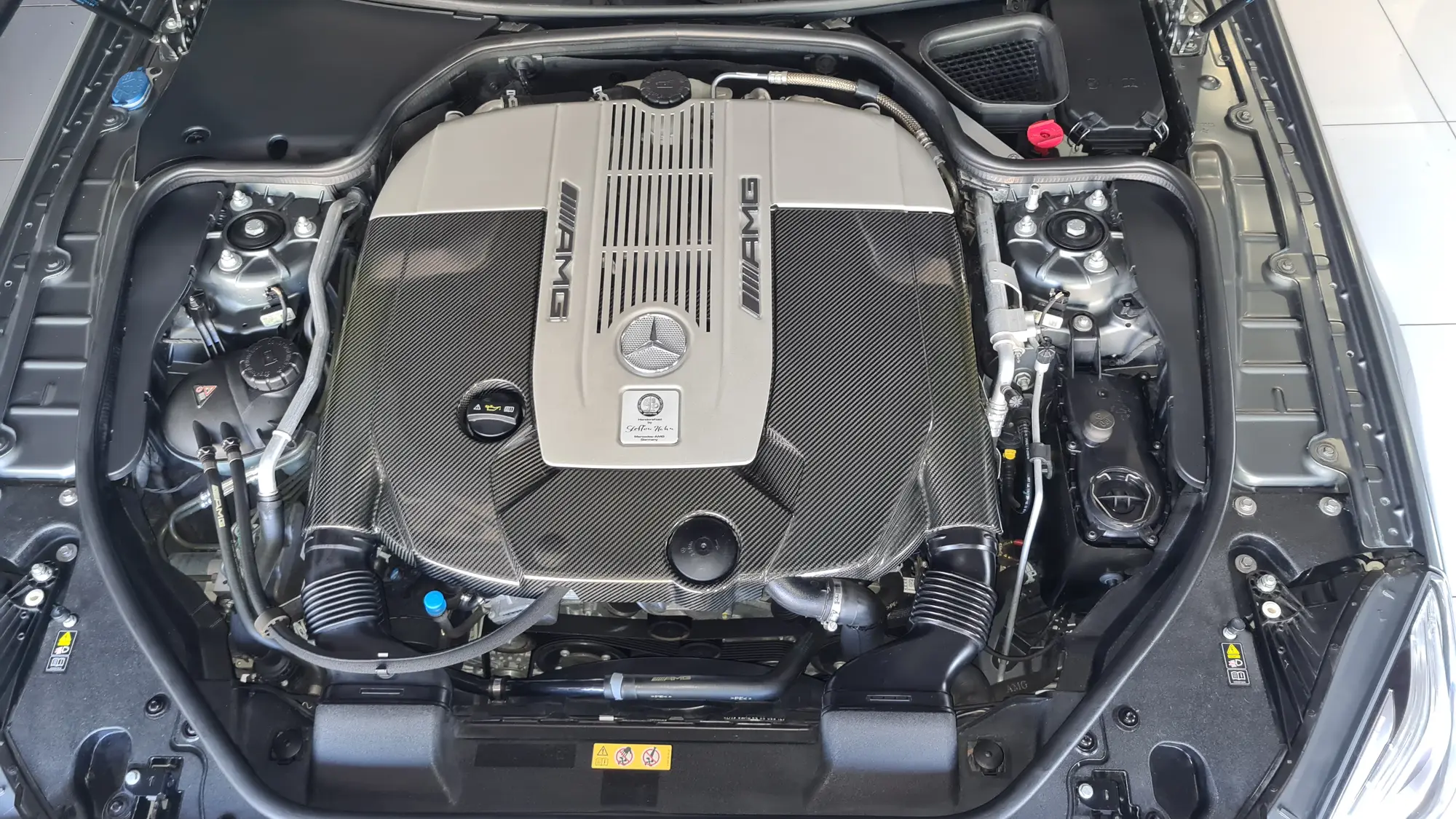
An engine bay is cleaned with control, not a hose. Sensitive electronics, the alternator, air intake and any exposed connectors are covered before a degreaser goes anywhere near them. We work with low-moisture methods and detail brushes, rinse minimally, force-dry with air, then dress plastics and hoses with a satin finish. A clean bay is easier to inspect, easier to sell, and shows a leak the day it starts rather than a year later.

  • Electronics, intake and alternator covered before any product is applied
  • Low-moisture degreasing with detail brushes rather than flooding
  • Force-dried with filtered air, including into connector recesses
  • Satin dressing on plastics and hoses — no wet-look gloss
The twin-turbo V12 engine bay of a Mercedes-AMG SL 65 after a dry-biased clean and satin dressing
Bay cleaned dry-biased, dressed mattePD
Wheels, calipers & exhaust tips

The details that decide how a car reads at ten paces

Wheel faces, barrels, brake calipers and exhaust tips take more chemical and thermal punishment than any painted panel on the car, and they are the first thing that makes an otherwise clean vehicle look tired. We restore them properly — decontaminated, corrected where the finish allows, then coated so brake dust stops bonding and the tips stop bluing back to brown within a fortnight.

  • Wheel faces and barrels decontaminated and coated, not just wiped
  • Brake calipers cleaned and, where appropriate, refinished
  • Exhaust tips polished back and sealed against re-staining
  • Coated surfaces release brake dust with a rinse rather than a scrub
A cleaned and coated Porsche wheel face and arch, the paint above it holding a clean reflection
Faces, barrels and calipersPD
Headlight restoration

Yellowed lenses are a safety issue, not a cosmetic one

Polycarbonate headlight lenses leave the factory with a hard UV coating. Once that coating fails the plastic underneath oxidises, goes yellow and scatters light — measurably reducing your beam pattern at exactly the moment you need it. We sand the failed layer back through progressive grits, machine polish the lens to optical clarity, then apply a fresh UV-stable coating so it does not simply yellow again in eighteen months.

  • Failed factory UV layer sanded back through progressive grits
  • Machine polished to optical clarity, not just visual improvement
  • Fresh UV-stable coating applied — the step most shops skip
  • Beam clarity restored, which is the point of the exercise
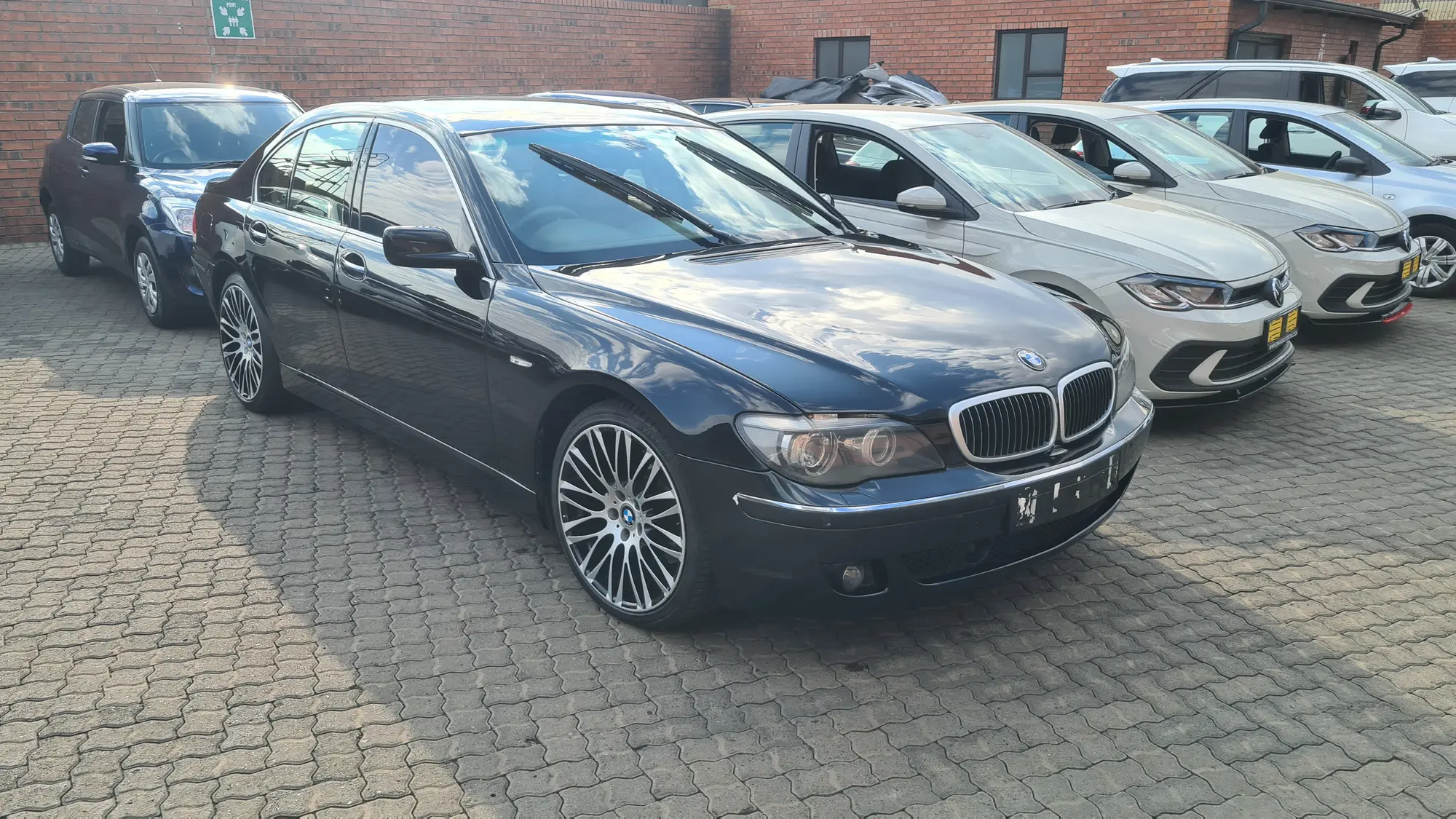
The front of a black BMW 7 Series after detailing, headlamp lenses clear and the paint reflecting cleanly
Lens clarity restoredPD
Wax, sealant or coating

Three ways to protect, honestly compared

Carnauba wax gives a warm, deep look and lasts about six to eight weeks — lovely on a show car, impractical on a daily driver. A synthetic sealant is harder and more chemically stable, holding four to six months. A ceramic coating bonds to the paint and holds for years. There is no universally right answer: it depends on whether you enjoy waxing on a Saturday or would rather never think about it again.

  • Carnauba wax — 6–8 weeks, warmest appearance, needs re-application
  • Synthetic sealant — 4–6 months, harder and more chemically resistant
  • Ceramic coating — 2–7 years, bonded, best long-term value
  • We will tell you when the cheaper option is the right one for your car
Snow foam breaking and running off the coated bonnet of a black Porsche around the crest
Protected paint, rinsed not scrubbedPD
Benefits

What you get out of it.

Permanent

Defects removed, not filled

Correction levels the clear coat rather than masking swirls with oils that wash out in a month.

Depth-mapped

Measured, safe correction

Depth gauge readings before and during work mean we never take more clear coat than the panel can spare.

Hot extraction

An interior that smells clean

Extraction removes what sits in the fibres instead of perfuming over it, so the result lasts.

Re-coated

Restored light output

Headlight restoration with a fresh UV layer puts your beam pattern back and keeps it there.

Value held

Better at resale

Corrected paint, a clean bay and a fresh interior are the difference between a fair offer and a good one.

Less contact

Easier ownership

Protected paint releases dirt, so every wash after ours is faster and safer than the one before.

Packages

How it is packaged.

Every package starts with the same inspection. What differs is how far the correction goes and how long the protection is warranted for.

Maintenance Detail

For a car already in good condition, kept that way on a regular cycle.

Quoted by vehicle size

3–4 hours

  • Pre-soak, foam and two-bucket contact wash
  • Wheels, arches and tips
  • Light chemical decontamination
  • Interior vacuum, wipe-down and glass
  • Sealant top-up on paint
Most requested

Full Detail

The complete exterior and interior reset. Our most common booking.

Quoted by vehicle size and condition

1–2 days

  • Full decontamination — iron, tar and clay
  • Single-stage machine polish
  • Interior deep clean with hot-water extraction
  • Leather clean and condition
  • Engine bay detail
  • Six-month sealant on paint and glass

Correction Detail

Multi-stage paint correction for tired, swirled or previously badly polished paint.

Quoted after paint inspection

2–4 days

  • Paint depth mapping across every panel
  • Two or three stage correction to a defined finish
  • Headlight restoration where required
  • Full interior detail
  • Choice of sealant or ceramic coating
  • Before and after gloss readings
On the day

Exactly how this job runs.

Tap any stage to see what happens inside it.

    • Existing chips, dents and repairs photographed
    • Clear coat depth recorded
    • Realistic finish agreed and written down
Expected lifespan

How long it holds

Correction
Permanent

Until new defects are put in by washing — which is why aftercare matters

Carnauba wax
6–8 weeks

Warmest look, shortest life

Synthetic sealant
4–6 months

The sensible default on a daily driver

Interior protection
12 months

Fabric and leather guard, re-applied at service

Maintenance plans

The cars that still look right three years later are on a cycle. We run scheduled maintenance details at six, eight or twelve-week intervals — priced well below a full detail because we are keeping a finish rather than rescuing one.

  • 01Six-weekly for daily drivers parked outside
  • 02Eight-weekly for garaged cars doing normal mileage
  • 03Quarterly for low-mileage and weekend cars
  • 04Annual correction top-up on coated vehicles to keep the warranty live
  • 05Wash media and a pH-neutral shampoo supplied so home washes do not undo the work
Questions

Automotive, answered.

All questions
  • A full detail on a mid-size car is one to two days. Correction work runs two to four days depending on how much of the clear coat needs levelling and how bad the starting condition is. We would rather quote two days and take two days than promise same-day and rush the correction.

Next step

Ready to talk about automotive?

Send us the details and you will have a written, itemised quote within one working day.