Skip to content

Premium vehicle detailing, paint correction and ceramic coating

General aviation · Hangar or apron

An airframe is a surface that lives outdoors at altitude.

Paint on an aircraft takes ultraviolet exposure at altitude, thermal cycling every flight, hydraulic and exhaust residue, and constant airflow carrying whatever is in it. Cleaning it is not the same job as cleaning a car — the chemistry, the water discipline and the areas you are not allowed to touch are all different.

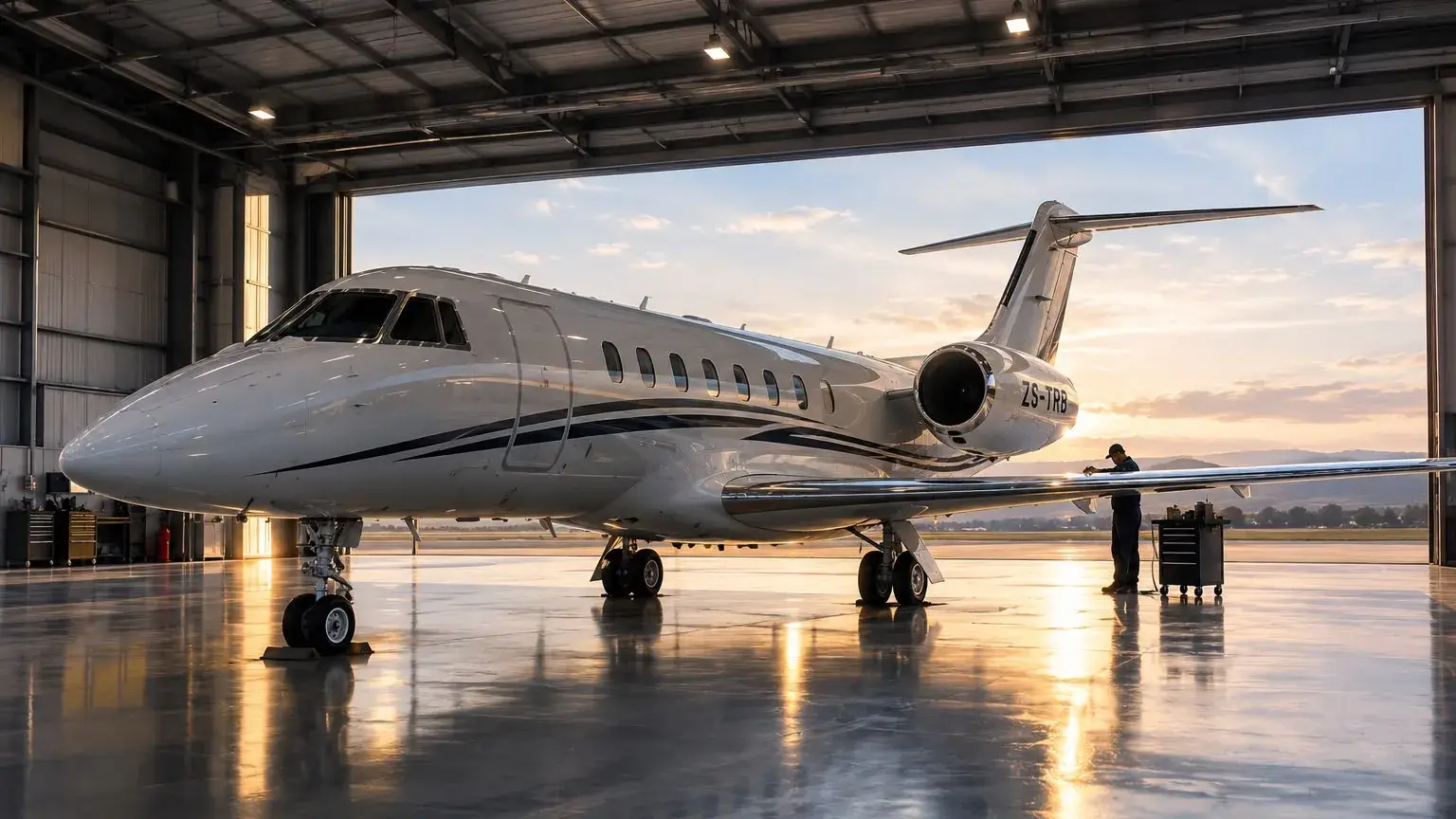
A business jet standing in a hangar at sunset, a technician working along the wing leading edge with the apron beyond
0L
Water used on a dry wash

Encapsulated cleaning, no run-off in the hangar

3yrs
Typical coating life

On painted composite and aluminium surfaces

2days
Typical single-engine job

Wash, correction and coating, hangar-based

The difference

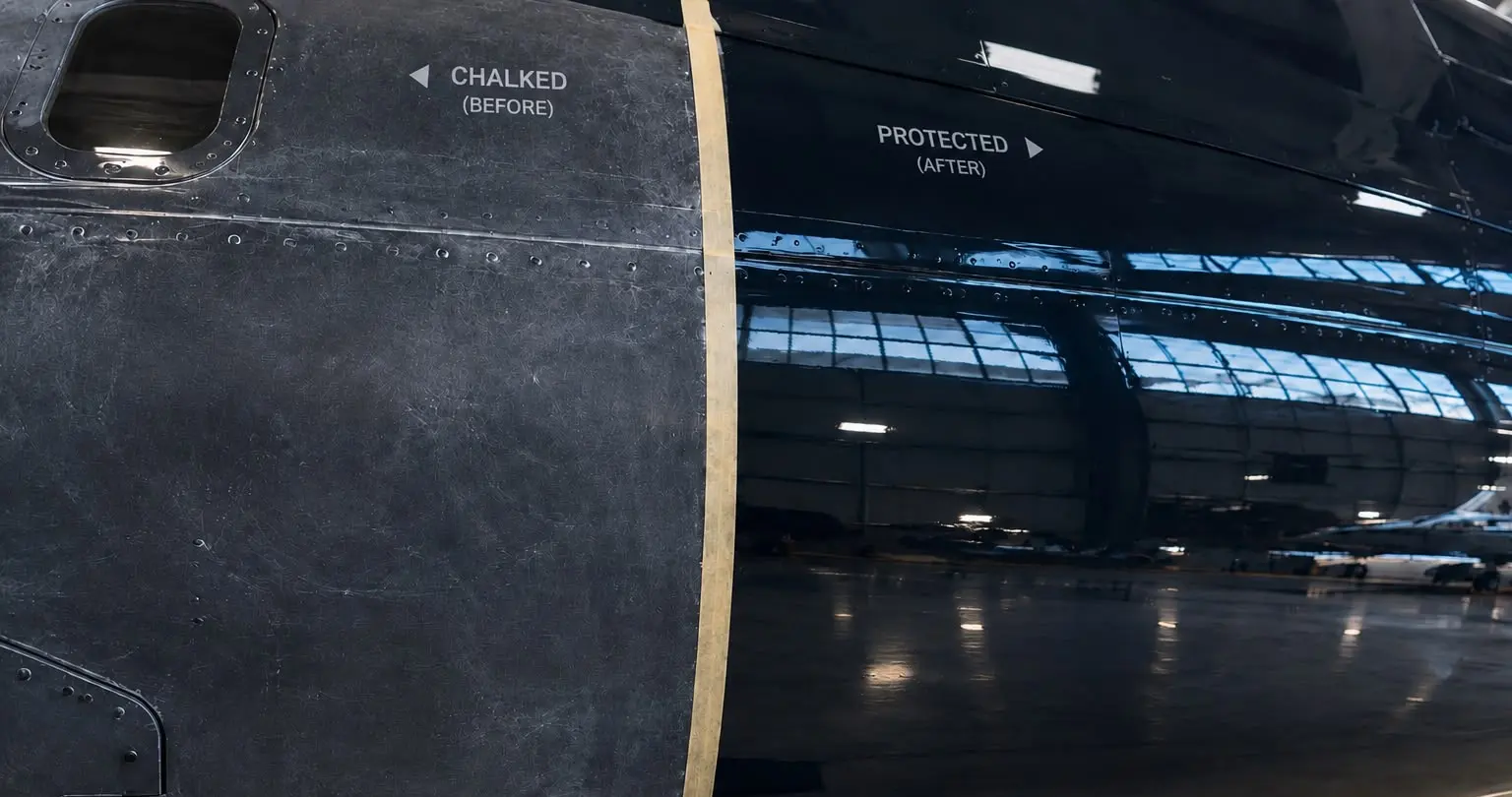
The same wing, in two different states of surface.

Aerodynamics is decided at the boundary layer, a few millimetres off the skin. What happens in that layer is governed by how smooth the surface underneath it is — which is the one variable a coating can actually change.

A business jet fuselage divided by masking tape: the chalked, matte section labelled before on the left, the coated section on the right returning the hangar roof as a clean reflection
Without ceramic coating

Microscopic surface roughness causes turbulent airflow. The boundary layer separates earlier, drag increases, and the airframe works harder for the same result.

With ceramic coating

An ultra-smooth, hydrophobic surface keeps airflow laminar for longer, lowering drag. The airframe also stays cleaner between washes, so the condition holds rather than decaying between visits.

Up to 3–5%Fuel savings

Perfect Detailing's published figure. Savings vary with aircraft type, mission profile, how contaminated the airframe was before treatment and coating quality. Treat it as an upper bound on a favourable case, not a number to budget against — the reliable returns are paint life, inspection clarity and shorter wash cycles.

Reduced drag

A smoother surface lowers skin friction and turbulent airflow.

Better fuel efficiency

Less drag means lower fuel burn and reduced operating cost.

Improved performance

More efficient airflow supports cruise speed, range and climb.

Long-term protection

Shields the surface from UV, oxidation and corrosion.

Easier to clean

Hydrophobic properties repel water, dirt and bugs, keeping the aircraft cleaner for longer.

Exterior cleaning

Dry washing, because water is the problem

A flooded wash puts water into places on an airframe that are difficult to dry: control surface hinges, static ports, seams, fastener heads and the gap behind fairings. Trapped moisture is how corrosion starts. We use an encapsulating dry-wash system — the product lifts soiling into a lubricating film that is removed with clean media — so contamination leaves the aircraft without water ever entering a seam. It also means we can work inside a hangar with no run-off, no containment and no wet floor.

  • Encapsulated dry wash — no water into seams, hinges or static ports
  • Works inside the hangar with no run-off or containment required
  • Media changed constantly; nothing abrasive dragged across paint
  • Pitot, static ports and probes covered before work begins
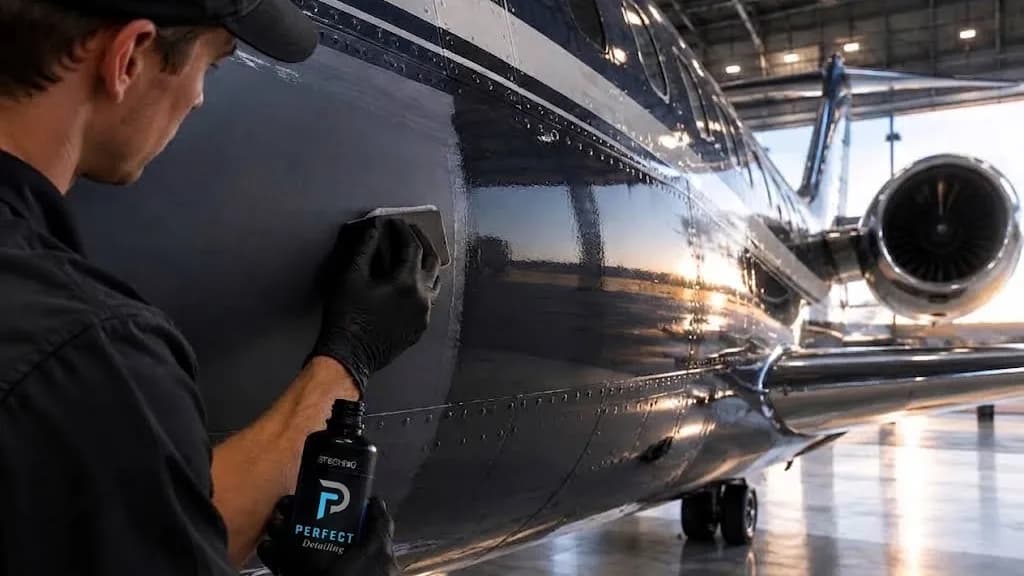
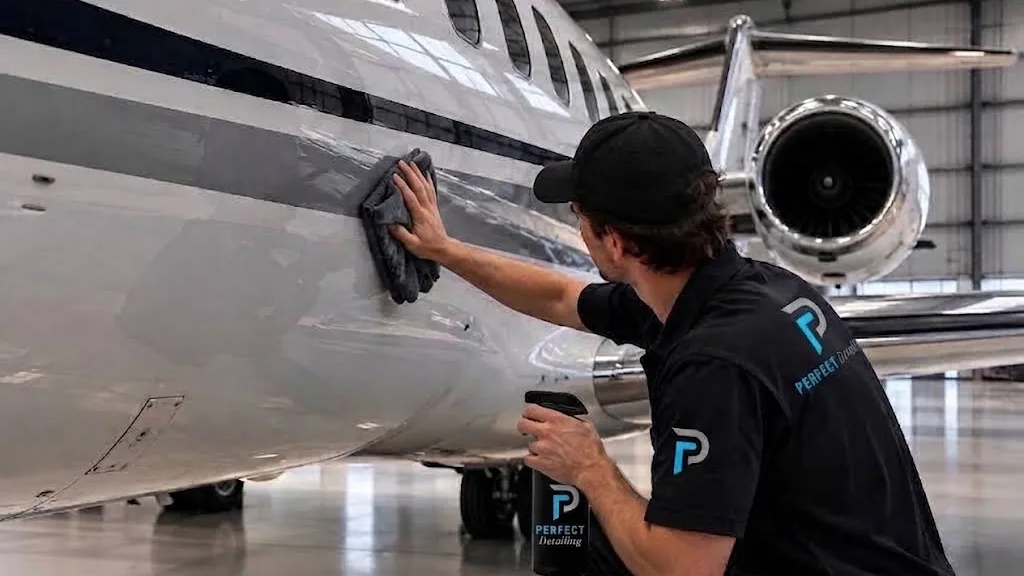
A technician working product across the fuselage of a business jet with a block applicator, bottle in hand, inside a hangar
Ceramic coating

Protection sized to an airframe

Once the surface is clean and, where appropriate, corrected, we apply a ceramic system rated for aviation surfaces across painted aluminium and composite. The result is a hard, UV-stable, hydrophobic film that resists exhaust staining, hydraulic residue and insect strike, and releases them with far less mechanical effort at the next clean. It is applied panel by panel with the same levelling discipline we use on paint, because streaks on a wing are visible from a long way off.

  • Rated for painted aluminium and composite airframe surfaces
  • UV-stable — the dominant ageing mechanism at altitude
  • Exhaust staining and hydraulic residue release rather than bond
  • De-icing boot maintenance and corrosion control handled as scoped
  • Windscreens and cabin windows restored with a high-clarity polish
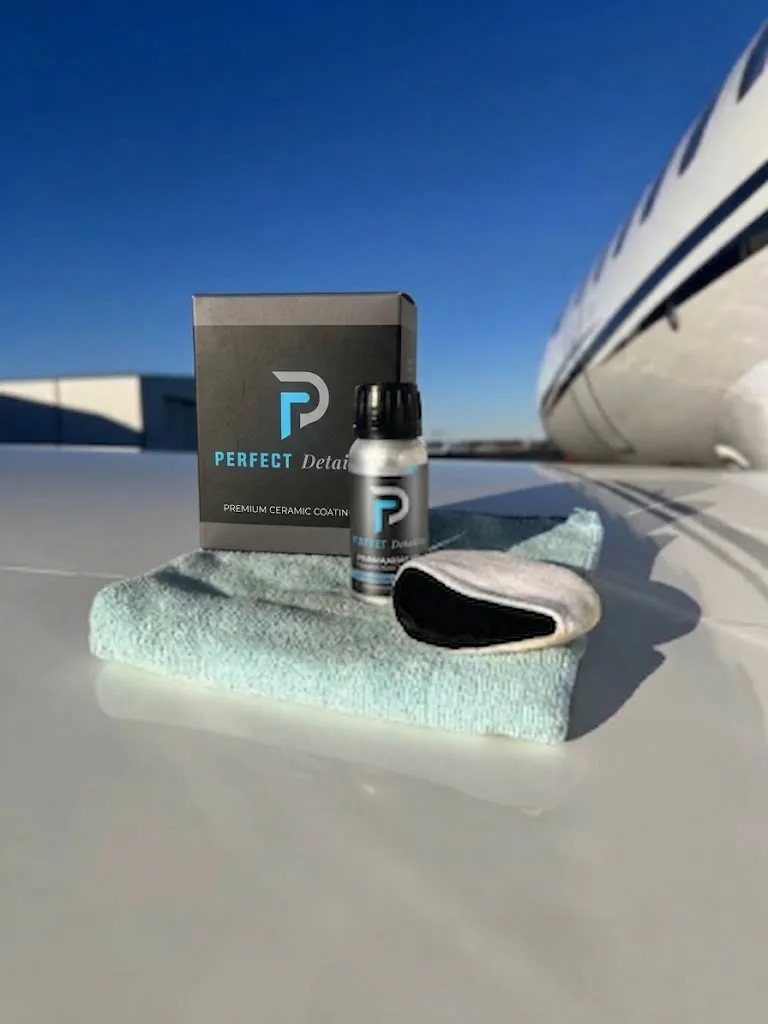
A bottle of Perfect Detailing ceramic coating with its box, a microfibre cloth and an applicator pad, resting on the wing of a business jet under a clear sky
Oxidation & polished surfaces

Stopping the chalk before it starts

Older paint schemes chalk and fade under sustained ultraviolet load; unpainted polished aluminium oxidises and hazes continuously and needs regular attention to stay bright. Both respond to the same approach: correct the surface back to a clean, uniform finish, then seal it so the oxidation clock resets rather than continuing where it left off.

  • Chalked paint corrected and sealed instead of dressed over
  • Polished aluminium brought back and protected to slow re-oxidation
  • Registration marks and decals worked around, never polished across
  • Boots, de-ice panels and non-painted surfaces excluded by default
A Perfect Detailing technician drawing a microfibre cloth along the polished fuselage of a business jet in a hangar
Aerodynamics

A smoother airframe holds its boundary layer for longer

Microscopic surface roughness, insect strike on the leading edges and accumulated grime all break up airflow over the wing and fuselage. The boundary layer trips from laminar to turbulent earlier than it needs to, and skin friction rises. A corrected, coated airframe keeps that flow attached further back, which is where the efficiency figures below come from. The effect is real, it is modest, and it varies enormously by type and by how dirty the aircraft was to begin with.

  • Cleaner leading edges keep airflow attached further aft
  • Lower skin friction across fuselage and wing surfaces
  • Largest gains on airframes that were genuinely dirty beforehand
  • Published figures are stated with their qualifier, never as a guarantee
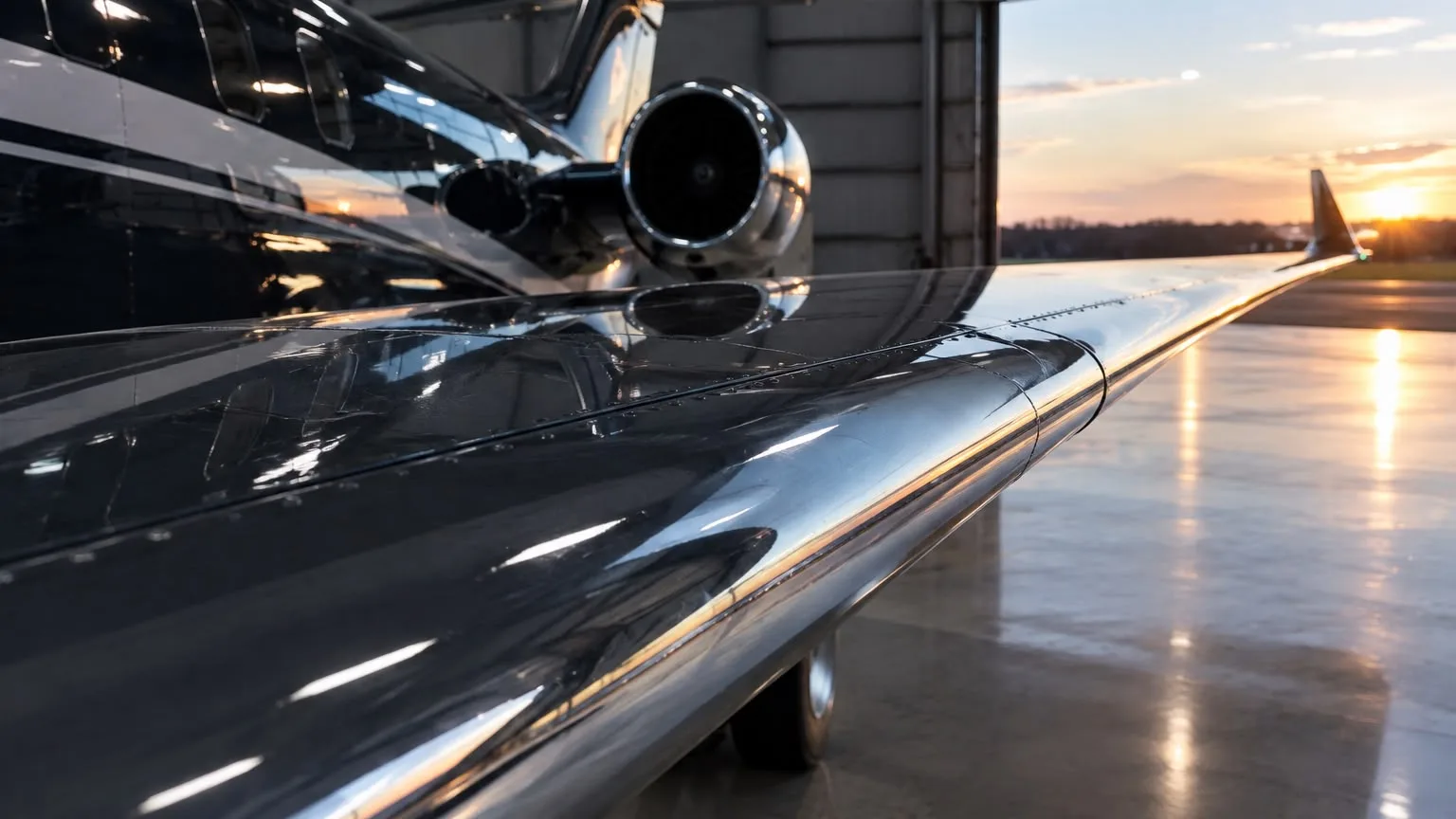
The polished wing and engine nacelle of a business jet in a hangar at sunset, the leading edge running unbroken towards the open door
Interior

Cabin, cockpit and the surfaces you touch on every flight

Cabin work covers leather and fabric seating, carpets, sidewalls and headliner, plus careful attention to the cockpit — instrument panel, glareshield, switch panels and glass. Screens and instrument faces are cleaned with appropriate media only, and nothing is sprayed near a panel: product goes onto the cloth, never onto the aircraft.

  • Leather and fabric seating cleaned and conditioned appropriately
  • Carpets extracted and dried before the aircraft is closed up
  • Instrument faces and screens cleaned with correct media only
  • Cabin and cockpit treated with specialised anti-bacterial agents
  • Product applied to cloth, never sprayed into a cockpit
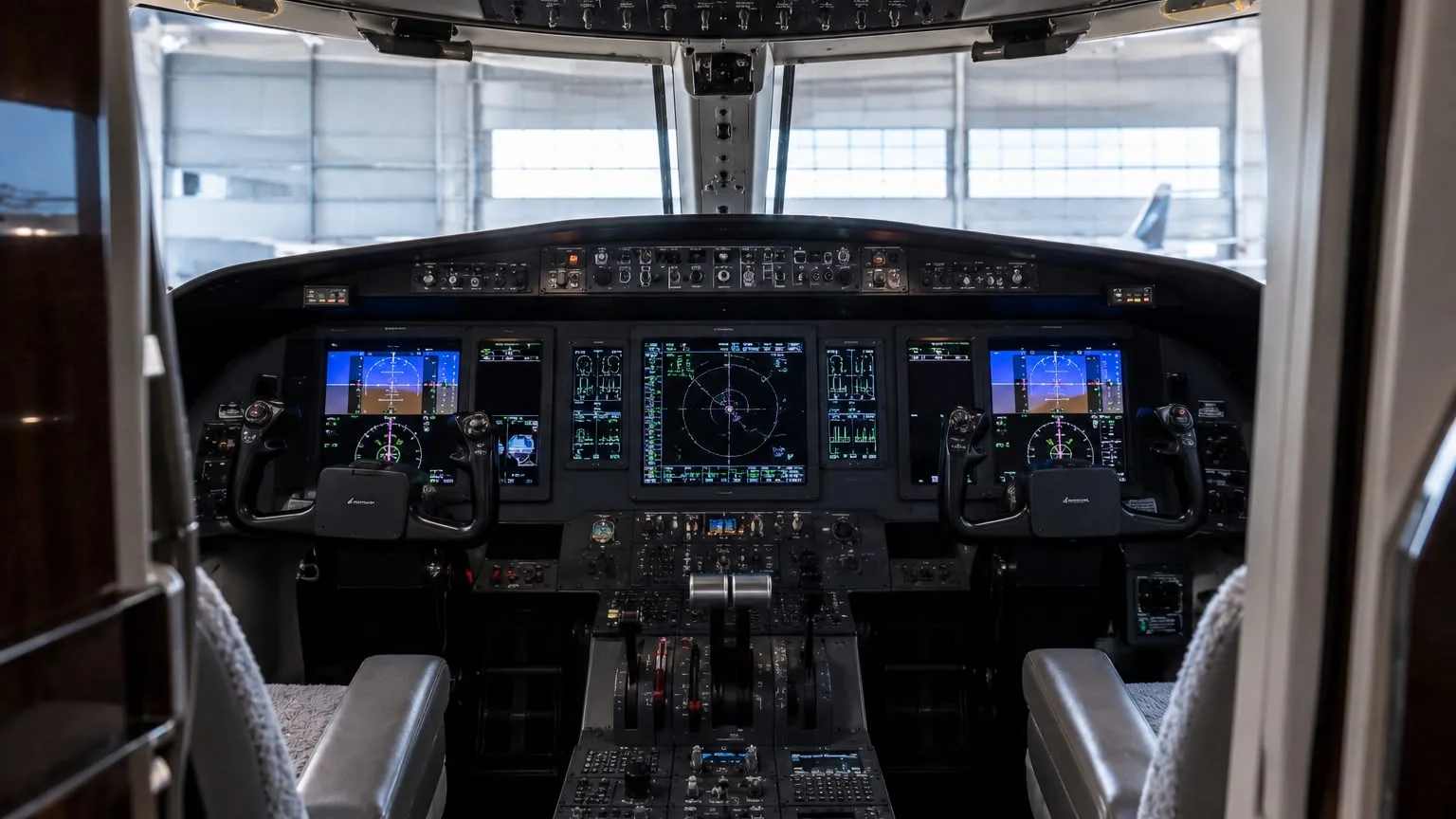
The glass cockpit of a business jet after an interior detail, avionics displays lit and both seats covered
Benefits

What you get out of it.

Zero run-off

No water into seams

Dry wash means no moisture trapped in hinges, fasteners or behind fairings, which is where corrosion begins.

UV-stable

UV and oxidation control

A stable coating takes the ultraviolet load that chalks paint and hazes polished aluminium.

Hydrophobic

Contaminants release

Exhaust staining, hydraulic residue and insect strike lift with far less mechanical effort at the next clean.

Visual clarity

Easier inspection

A clean, uniform surface makes a developing crack, a weep or a fastener working loose obvious far sooner.

Quicker cleans

Faster turnarounds

Coated airframes clean in a fraction of the time, which matters when the aircraft is scheduled.

Value held

Presentation holds

Charter, syndicate and resale aircraft keep looking like they are looked after, because they are.

Suitable aircraft

What we are set up for.

  • Single-engine pistonCessna 172/182, Piper PA-28, Cirrus SR20/22 and similar
  • Light twin pistonBaron, Seneca, Aztec and comparable airframes
  • TurbopropPC-12, King Air and similar, subject to hangar access
  • Light sport & experimentalComposite airframes welcome; we confirm coating compatibility first
  • HelicoptersPiston and light turbine, main rotor area excluded from scope
Maintenance schedule

When it should happen.

  1. 01Every 6–8 weeksExterior dry wash, leading edges, belly and glass
  2. 02Every 6 monthsFull exterior plus cabin refresh and coating check
  3. 03Every 12 monthsCoating inspection, correction where needed, top-up layer
  4. 04Before sale or charterFull presentation detail, interior and exterior

Scope, compliance and the things we will not touch

  • Work is cosmetic only — we do not touch anything requiring an approved maintenance release
  • Scope agreed in writing with the owner or maintenance organisation before the date
  • Covers on probes and ports logged on a checklist and walked in reverse at completion
  • Public liability cover in place; certificate available on request
  • Products confirmed compatible with your paint scheme before first application
Packages

How it is packaged.

Every package starts with the same inspection. What differs is how far the correction goes and how long the protection is warranted for.

Exterior dry wash

Scheduled airframe clean, hangar-based, no water.

Quoted by type

3–6 hours

  • Full encapsulated dry wash
  • Leading edge insect removal
  • Belly degrease and exhaust stain treatment
  • Glass and windscreen with correct media
  • Gear legs, wells and wheels
Most requested

Wash & ceramic coating

Full exterior treatment with coating applied to painted surfaces.

Quoted after survey

2–3 days

  • Dry wash and full decontamination
  • Correction on chalked or oxidised areas
  • Ceramic coating across painted surfaces
  • Glass coated separately
  • Written scope and completion record

Full interior & exterior

Exterior coating plus complete cabin and cockpit work.

Quoted after survey

3–5 days

  • Everything in the wash and coating package
  • Leather and fabric seating cleaned and conditioned
  • Carpets extracted and dried
  • Cockpit panels, screens and switchgear
  • Scheduled return visit included
On the day

Exactly how this job runs.

Tap any stage to see what happens inside it.

    • Paint condition and oxidation assessed
    • Exclusions agreed — boots, de-ice panels, probes
    • Written scope issued before the date
Expected lifespan

How long it holds

Coating on painted surfaces
2–3 years

Depending on hours flown and whether the aircraft is hangared

Dry wash interval
6–8 weeks

Hangared aircraft in normal use

Full hardness
24–48 hours

Aircraft should remain hangared through cure

Inspection
Every 12 months

Coating condition checked and topped where needed

Maintenance schedules

Aircraft respond to routine far better than to rescue work. We schedule around your utilisation and your maintenance calendar rather than the other way round.

  • 01Six to eight weekly dry wash for hangared aircraft in regular use
  • 02Four weekly for aircraft parked outside or flown off grass
  • 03Leading edge and belly attention after any high-insect season
  • 04Annual coating inspection aligned to your scheduled maintenance
  • 05Pre-sale or pre-charter presentation detail on request
Questions

Aircraft, answered.

All questions
  • Water is the risk. A flooded wash pushes moisture into control surface hinges, seams, fastener heads and behind fairings, and trapped moisture is how corrosion starts. An encapsulating dry wash lifts soiling into a lubricating film that is removed with clean media — no water enters a seam, and we can work inside the hangar with no run-off at all.

Next step

Ready to talk about aircraft?

Send us the details and you will have a written, itemised quote within one working day.