Your swirl marks came from the wash, not the road
Owners assume paint wears out. It does not — it gets scratched, almost always by the thing that was supposed to be cleaning it.
5 minute readPerfect Detailing
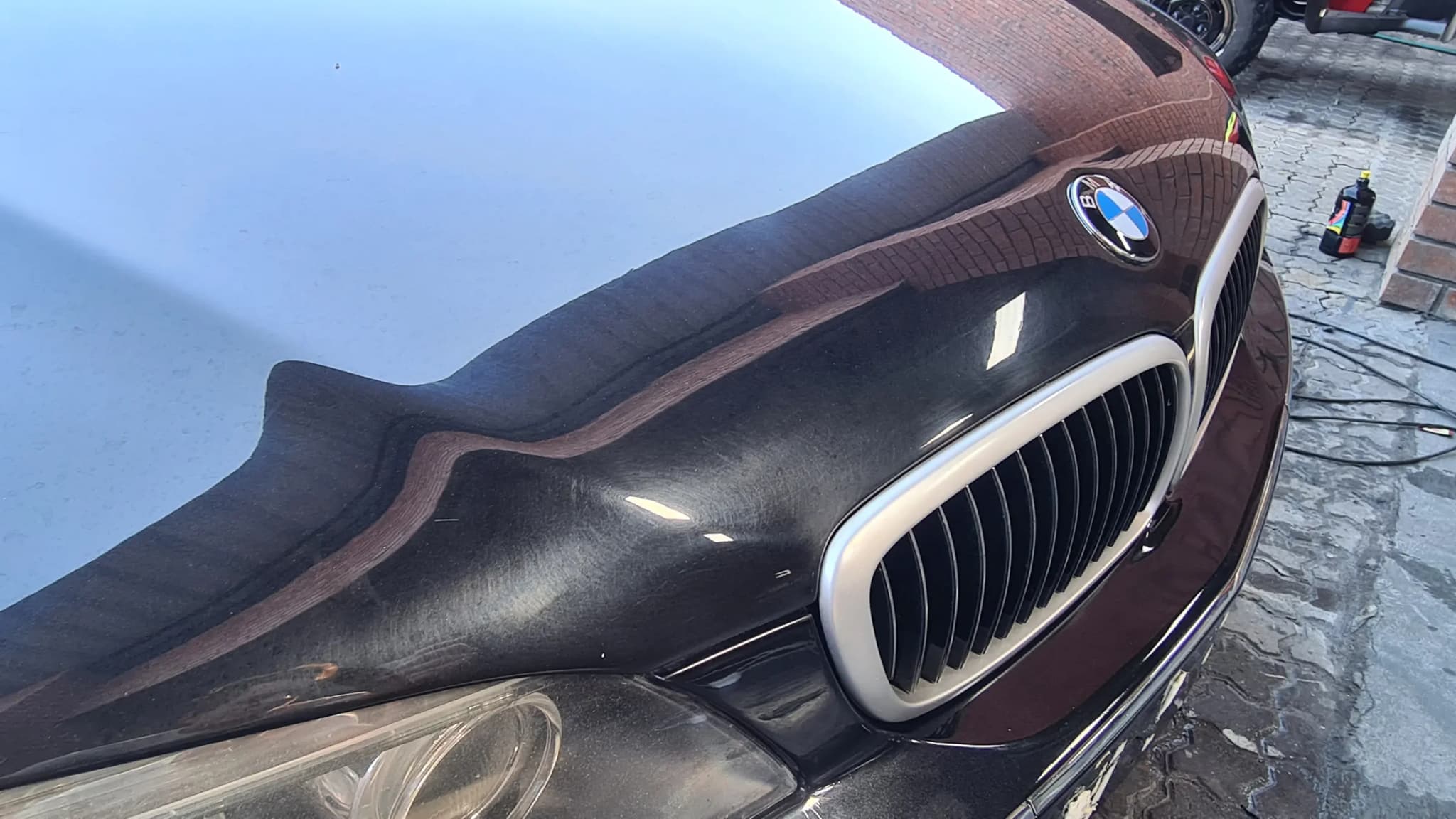
Ask an owner where the swirl marks on their bonnet came from and you will usually hear something about age, or sun, or the highway. It is an understandable answer and it is almost never the right one. Paint does not wear out from being driven. It gets scratched, and the overwhelming majority of those scratches are installed during washing.
The mechanism is not subtle. A car collects a film of road dust, and that dust is silica — mineral, angular, and harder than clear coat. Anything dragged across an unrinsed panel drags that grit with it. A forecourt brush that has already been through forty vehicles is carrying forty vehicles' worth of it. A sponge holds grit in its pores and releases it under pressure. A chamois pulled over a panel that is not perfectly clean is a lapping tool.
You can see the pattern in the damage. Swirls are circular because they were put in by something moving in circles. Straight-line scratches down a flank came from a straight-line motion — usually drying. Holograms, that shimmering buffer trail visible in direct sun, are the signature of a rotary polisher used too fast by someone who did not refine afterwards. Every one of those is a record of a specific human action, not of weather.
Which leads somewhere slightly uncomfortable for our industry: correcting a car and then handing it back without changing how it is washed is selling the same job twice. The correction is genuine and permanent — the clear coat really is level — but if it goes back into an automatic wash every fortnight it will be visibly marred again inside eighteen months.
So the two things that actually protect a correction are a coating, which puts a harder sacrificial layer between the grit and your paint, and a wash method that stops introducing grit in the first place. Pre-soak so the dust leaves before anything touches the panel. Foam and let it dwell. Two buckets with grit guards, fresh media, top down, straight lines. Rinse with deionised water so it dries without spotting, and dry with filtered air or a plush towel rather than dragging anything across the surface.
None of that is difficult. It is just slower than the thing most people do instead, and the cost of the faster option is paid in clear coat.